AI TOOL PROFILE
EdOptions Academy: K-12 Virtual Learning Platform

- Education and Training
- Learning Management System
- K-12 School Districts
- Public Schools
- Education Administrators
Pricing
Pricing starts at $80 per student, per course.
At a glance
- Best for
- K-12 School Districts, Public Schools, Education Administrators
- Key use cases
- Credit Recovery, Addressing Staffing Gaps, Independent Study, Expanding Course Access
- Official website
- Visit edoptions academy official website
How AI is used
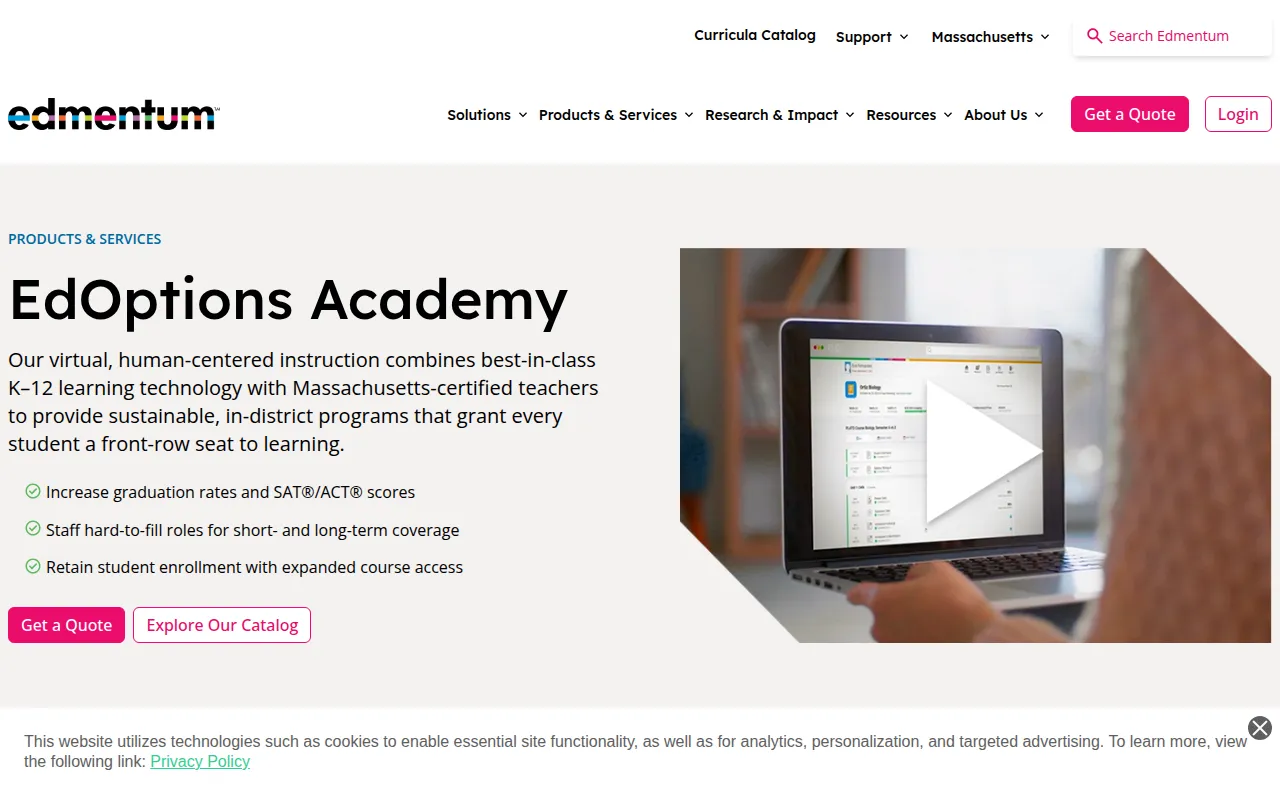
EdOptions Academy is a K-12 virtual learning platform for school districts. It provides a catalog of core, AP, CTE, and NCAA-approved courses taught by certified educators, which may help schools maintain enrollment and provide students with flexible learning options.
The platform offers two instruction models: Flexible Virtual Learning, which is student-paced, and Enhanced Virtual Learning, which provides live instruction aligned to a school's bell schedule for grades 6-12. This is intended to support various student needs, including homeschool programs and long-term substitute coverage.
Buyers should note that while the platform is Cognia accredited, this status is not transferable to the customers. Administrators should confirm if the per-student, per-course pricing model meets their budget and enrollment goals.
Key Features
Course Catalog
Includes over 500 core, AP, CTE, and NCAA-approved courses.
Flexible Virtual Learning
A student-paced model for K-12 students to learn on their own schedule.
Enhanced Virtual Learning
Live virtual instruction for grades 6-12 aligned with the school bell schedule.
Certified Instruction
Courses are taught by state-certified teachers specializing in virtual instruction.
Academic Integrity Tools
Includes plagiarism detection through Copyleaks and AI-generated content to support writing skills.
Accreditation
The program is accredited by Cognia.
Use Cases
Credit Recovery
Supporting students who need to recover credits to meet graduation requirements.
Addressing Staffing Gaps
Providing instruction for hard-to-fill roles or long-term substitute coverage.
Independent Study
Supporting students in independent study or homebound programs.
Expanding Course Access
Offering a wider variety of courses, such as AP or CTE, than a district may be able to staff internally.
FAQ
What is the cost of EdOptions Academy?
- Pricing for EdOptions Academy starts at $80 per student, per course.
What types of courses does the platform offer?
- The platform offers over 500 courses, including core subjects, AP, CTE, and NCAA-approved options.
Does EdOptions Academy provide live teachers?
- Yes, the Enhanced Virtual Learning model provides live instruction from state-certified teachers for students in grades 6-12.
Source category: Education & Training
Source subcategory: Learning Management System
More tools in Education & Training
Other published listings in the Education & Training category.


More tools in the Learning Management System software type
Related listings that share the same software type for comparison and shortlisting.

