AI TOOL PROFILE
Rose Rocket: Transportation Management System

- Operations
- Transportation Management
- Freight brokerages
- Trucking carriers
- Supply chain technology executives
Pricing
Pricing was not clearly available from the provided evidence. Buyers should confirm current pricing on the vendor website.
At a glance
- Best for
- Freight brokerages, Trucking carriers, Supply chain technology executives
- Key use cases
- Order Automation from Email, Shipment Information Management, System Onboarding
- Official website
- Visit Rose Rocket official website
How AI is used
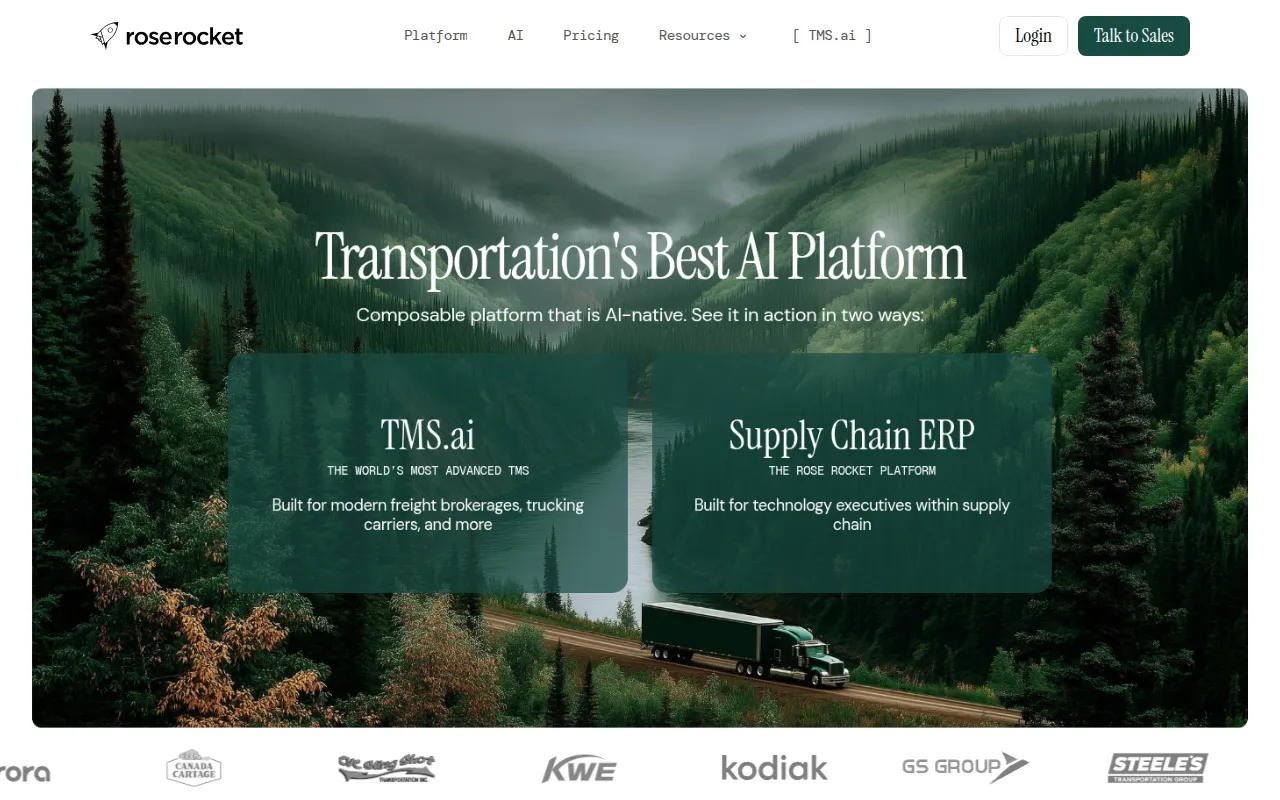
Rose Rocket is a transportation management system (TMS) designed for the freight and logistics sector. It provides a platform that includes built-in servers, databases, and security workflows to support the operational needs of freight movements.
The software is designed for freight brokerages, trucking carriers, and supply chain technology leads. It combines ready-made transportation business logic with tools that allow teams to customize the software to fit their specific operational needs.
Key functionality includes AI-driven assistants that help manage the transition from email communication to active orders and shipment updates. The system is built as a composable platform to support scaling operations through automation.
Buyers should confirm how the customizable logic aligns with their specific freight workflows and verify the available support options for their scale of operation.
Key Features
TED Email Assistant
An AI tool designed to convert emails into orders, keep order details updated based on email communication, and sync documents into the TMS.
Rosie Order Assistant
An AI assistant that helps users complete shipment updates and find insights regarding specific shipments.
Rocky Onboarding Partner
A 24/7 AI assistant designed to support business setup and optimization during onboarding.
Customizable Platform
A composable system that allows teams to adapt embedded transportation logic to their business needs.
Core Infrastructure
Includes built-in servers, databases, security, and automation workflows.
Use Cases
Order Automation from Email
Using the TED assistant to turn incoming email requests into orders and sync documents into the TMS.
Shipment Information Management
Using the Rosie assistant to track shipment details and complete necessary updates.
System Onboarding
Using the Rocky assistant for 24/7 guidance during initial business setup and platform optimization.
FAQ
Who is Rose Rocket designed for?
- It is designed for freight brokerages, trucking carriers, and technology executives working within the supply chain.
What does the AI do in Rose Rocket?
- It provides assistants like TED for converting emails to orders, Rosie for shipment insights, and Rocky for 24/7 onboarding support.
Is the platform customizable?
- Yes, it is a composable platform with embedded business logic that users can adapt to their own needs.
Source category: Operations
Source subcategory: Transportation Management
More tools in Operations
Other published listings in the Operations category.


More tools in the Transportation Management software type
Related listings that share the same software type for comparison and shortlisting.