AI TOOL PROFILE
MileApp: AI Retail Execution Software

- Operations
- Retail Execution Software
- Retail chains
- Consumer goods companies
- Enterprise retailers
- Large-scale store network managers
Pricing
Pricing was not clearly available from the provided evidence. Buyers should confirm current pricing on the vendor website.
At a glance
- Best for
- Retail chains, Consumer goods companies, Enterprise retailers, Large-scale store network managers
- Key use cases
- Preventing Stockouts, Merchandising Compliance, Market Share Analysis, Price Monitoring
- Official website
- Visit retail execution official website
How AI is used
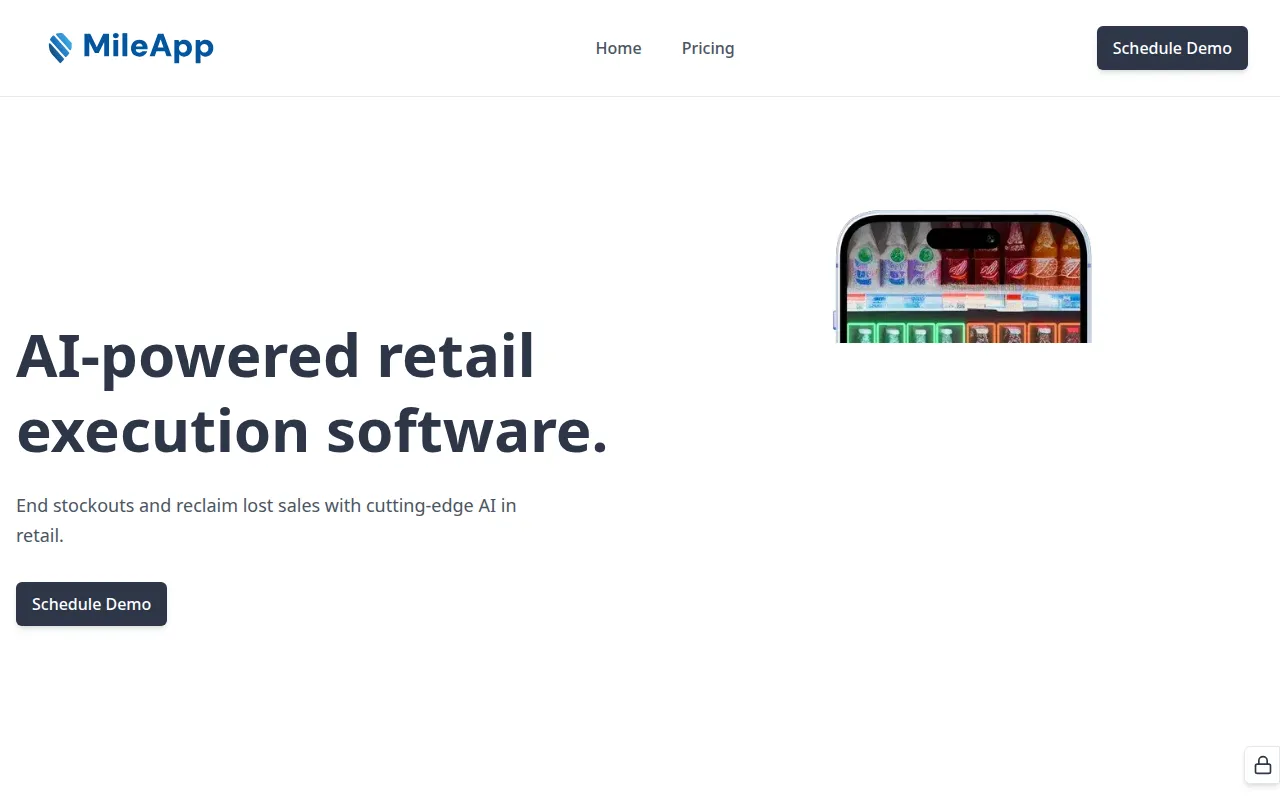
MileApp is an AI-powered retail execution platform designed to help businesses maintain in-store standards across multiple locations. It uses computer vision and image recognition to analyze store shelves, which helps teams identify out-of-stock items and check if products are placed according to planograms.
The software supports large-scale retail operations and provides tools for monitoring inventory levels, calculating share of shelf, and gathering pricing intelligence from photos taken in the field.
Buyers should note that the platform includes ISO 27001 certification and a 99.9% SLA. Organizations should confirm if the AI's accuracy for their specific SKU count meets their operational requirements before deploying.
Key Features
Out-of-stock detection
Monitors inventory levels in real time and can automatically trigger reorders when stock is low.
Planogram compliance verification
Uses computer vision to verify that products are displayed as intended by the merchandising team.
Share of shelf calculation
Analyzes shelf space to provide data on product presence and competitor activity.
Dynamic pricing intelligence
Extracts and analyzes pricing data from store shelves using AI and image recognition.
Automated stock audits
Supports digital auditing processes to help reduce manual errors and identify potential fraud.
Use Cases
Preventing Stockouts
Monitoring on-shelf availability to reduce lost sales opportunities and trigger reorders.
Merchandising Compliance
Using image analysis to check if products are placed correctly according to brand standards.
Market Share Analysis
Capturing and analyzing shelf space data to assess competitive positioning.
Price Monitoring
Collecting pricing data from shelves to help inform market adjustments.
FAQ
What does MileApp do for retail stores?
- MileApp uses AI and computer vision to detect out-of-stock items, verify planogram compliance, and analyze shelf space and pricing data.
Who is this software best for?
- It is designed for enterprise-level retailers and consumer goods companies that manage large networks of stores.
How does the AI analysis work?
- The workflow involves taking a photo of the retail shelf, which is then analyzed by AI to generate reports in real time.
Source category: Operations
Source subcategory: Retail Execution Software
More tools in Operations
Other published listings in the Operations category.


