AI TOOL PROFILE
PROS: AI-Powered Airline Retailing & Offer Management

- Operations
- Revenue Management Platform
- Full-service airlines
- Low-cost carriers
- Regional airlines
- International airlines
Pricing
Pricing was not clearly available from the provided evidence. Buyers should confirm current pricing on the vendor website.
At a glance
- Best for
- Full-service airlines, Low-cost carriers, Regional airlines, International airlines
- Key use cases
- Transitioning to Continuous Pricing, Ancillary Revenue Management, Direct Channel Merchandising, Demand-Based Price Adjustment
- Integrations
- ATPCO, IATA, OAG, Passenger Service Systems (PSS), Global Distribution Systems (GDS)
- Official website
- Visit pros pricing official website
How AI is used
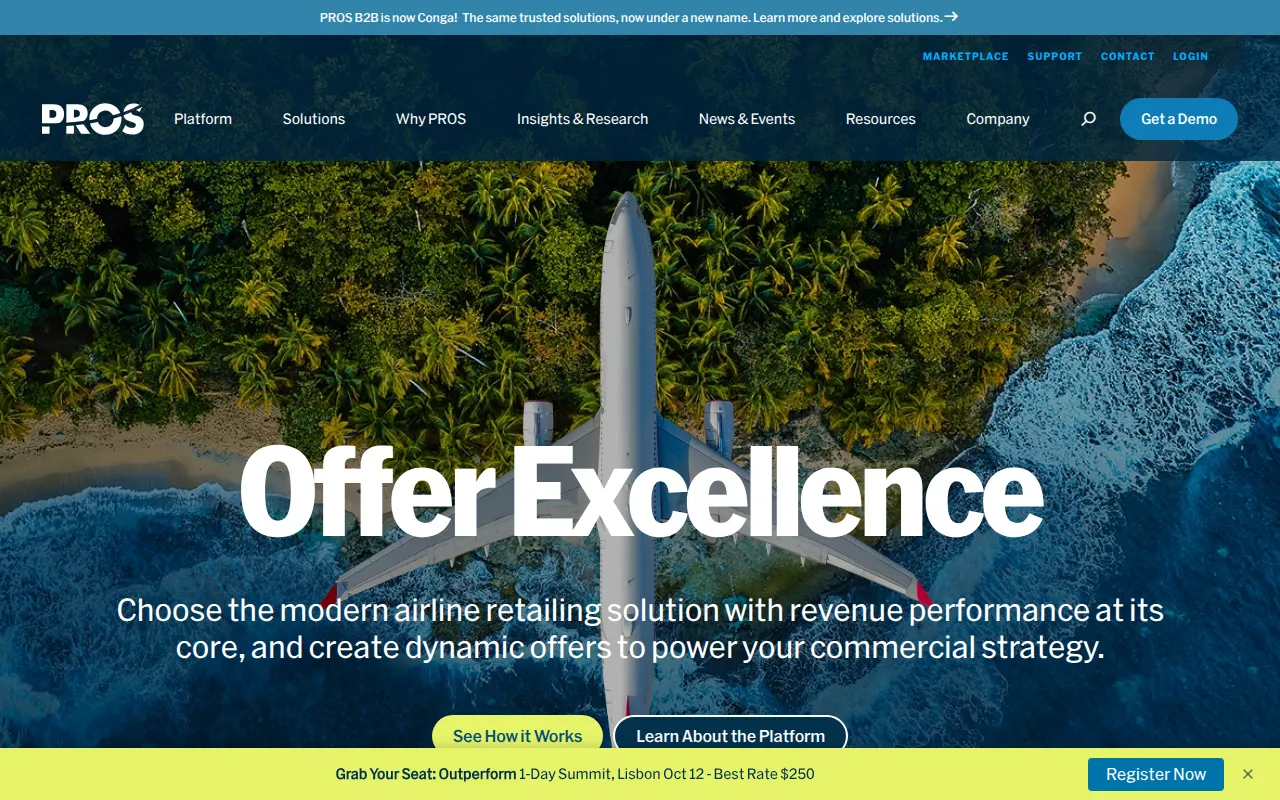
PROS is a revenue management and retailing platform built for the airline industry. It uses AI to help carriers determine pricing for seats and ancillary products in real time, supporting full-service, low-cost, and regional carriers.
The platform is designed for aviation commercial teams who need to coordinate revenue strategy with execution across digital channels and distribution partners. It provides tools for demand analysis, offer creation, and shopping merchandising to help maintain a competitive market position.
Buyers should confirm that this is an enterprise-level solution intended for organizations with the infrastructure to integrate AI-driven pricing into existing reservation and inventory systems.
Key Features
Real-Time Dynamic Pricing
Calculates availability and optimizes pricing based on demand and capacity constraints in real time.
Continuous Pricing
Supports the creation of price points between predefined fare levels to reduce abrupt price jumps.
Offer Optimization
Uses AI to forecast demand and set dynamic prices for seats and ancillary products.
Ancillary Pricing
Provides dynamic pricing and optimization for non-ticket airline products.
Offer Marketing
Tools for creating targeted campaigns and bookable offers across digital marketing channels.
Group Sales Optimizer
Designed to help optimize pricing and availability for group bookings.
Use Cases
Transitioning to Continuous Pricing
Moving from rigid, class-based fare buckets to more flexible, AI-driven price points.
Ancillary Revenue Management
Applying dynamic pricing to add-on services to support conversion and yield.
Direct Channel Merchandising
Using shopping merchandising tools to present tailored offers on an airline's own website.
Demand-Based Price Adjustment
Responding to market shifts by adjusting availability and fares in real time.
Integrations
- ATPCO
- IATA
- OAG
- Passenger Service Systems (PSS)
- Global Distribution Systems (GDS)
- Accelya
- OpenJaw
FAQ
What is continuous pricing in PROS?
- It allows airlines to offer precise fares between predefined price levels instead of relying on rigid, class-based fare buckets.
Can PROS integrate with existing airline systems?
- Yes, it is designed to integrate with Passenger Service Systems (PSS), Global Distribution Systems (GDS), and data providers like ATPCO and IATA.
Who is the target buyer for PROS?
- The software is built for enterprise-level airlines, including full-service, low-cost, and regional carriers.
Source category: Operations
Source subcategory: Revenue Management Platform
More tools in Operations
Other published listings in the Operations category.


