AI TOOL PROFILE
iMSi.Ai: Enterprise eSIM Connectivity Platform

- Operations
- Cloud Infrastructure
- Mid-market companies
- Enterprise companies
- Organizations with global IoT deployments
- Businesses requiring network redundancy
Pricing
Pricing was not clearly available from the provided evidence. Buyers should confirm current pricing on the vendor website.
At a glance
- Best for
- Mid-market companies, Enterprise companies, Organizations with global IoT deployments, Businesses requiring network redundancy
- Key use cases
- IoT Edge Device Management, Critical Infrastructure Monitoring, Secure Mobile Workforce Access, Medical Device Connectivity, Fleet and Logistics Tracking
- Official website
- Visit ims i official website
How AI is used
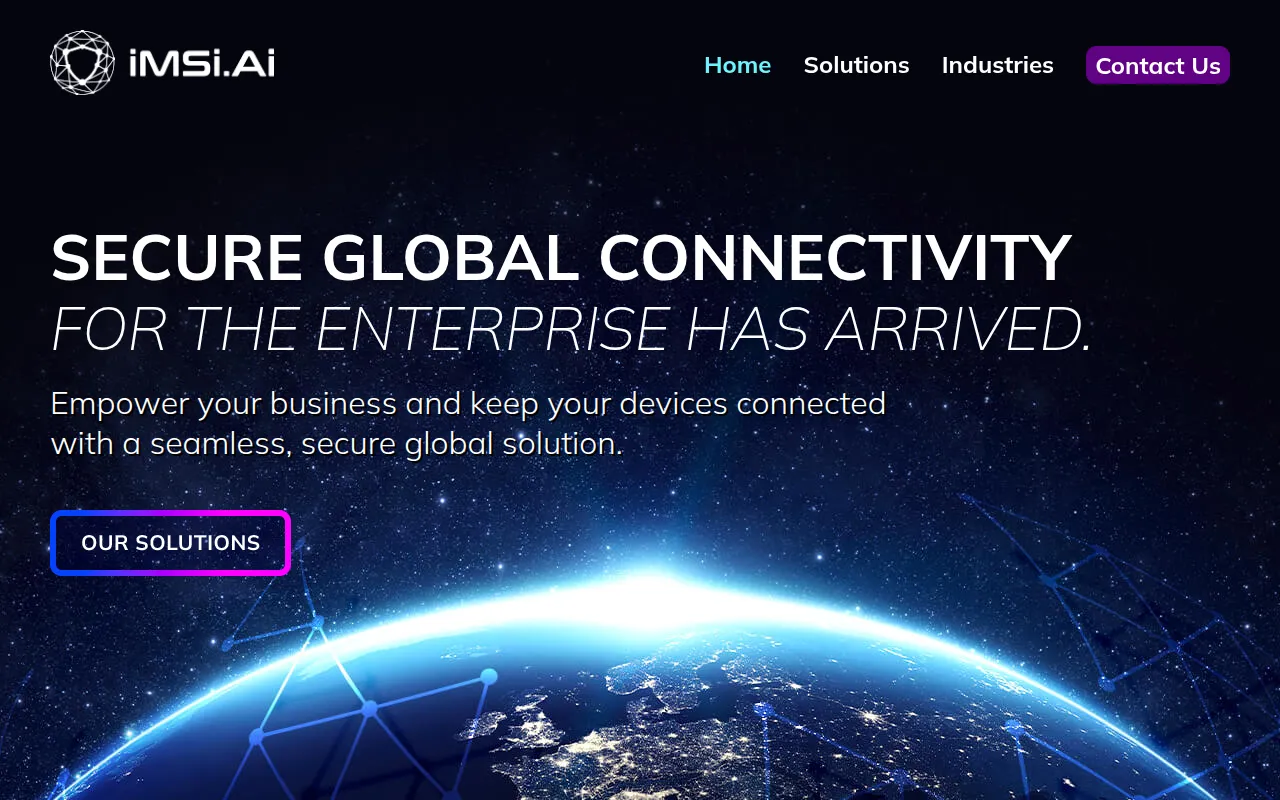
iMSi.Ai is a connectivity platform that uses universal eSIM technology to provide data access across the United States and internationally. By partnering with over 600 mobile network operators, the system allows devices to authenticate and transmit data regardless of the specific location or carrier.
The platform is designed for large organizations with geographically dispersed workforces and complex IT needs, particularly those operating IoT devices at scale. It supports both public and private 4G and 5G networks to provide connectivity that does not rely on public Wi-Fi.
Operational capabilities include remote management of edge devices, the ability to set user hierarchies, and tools to steer devices toward the strongest available signal. The system is built to follow GSMA SGP.22 and SGP.32 specifications for remote SIM provisioning.
Buyers should confirm if their specific device hardware supports the required eSIM specifications and whether the API or GUI management tools align with their IT operations workflow.
Key Features
Universal eSIM Technology
Uses a single SIM to authenticate subscribers and transmit data across a network of over 600 mobile operators.
Network Redundancy
Provides failover capabilities that may help ensure devices remain connected via a wide network of carriers.
Remote SIM Provisioning
Supports remote provisioning of SIMs in alignment with GSMA SGP.22 and SGP.32 specifications.
Security Suite
Includes end-to-end encryption, firewall protection, dual device verification, and threat monitoring.
5G Connectivity
Supports low latency connectivity using both public and private 5G networks.
Remote Device Management
Allows administrators to control network access, set user hierarchies, and manage devices via a GUI or API.
Use Cases
IoT Edge Device Management
Remotely managing and steering edge devices to the best available signal across global networks.
Critical Infrastructure Monitoring
Supporting connectivity for smart sensors in energy and utilities to monitor fluctuations and faults.
Secure Mobile Workforce Access
Providing government or financial services employees with secure data access that avoids public Wi-Fi risks.
Medical Device Connectivity
Supporting the Internet of Medical Things (IoMT) to help maintain connectivity for devices during medical procedures.
Fleet and Logistics Tracking
Maintaining coverage for IoT devices used to monitor vehicle positions and equipment activity.
FAQ
What does iMSi.Ai do?
- iMSi.Ai provides a global eSIM platform that allows enterprise devices to connect to over 600 mobile carriers using a single SIM, consolidating multiple carrier contracts.
Who is the target buyer for iMSi.Ai?
- The platform is designed for mid-market and enterprise companies, particularly those in healthcare, logistics, energy, government, and financial services.
Does iMSi.Ai support 5G?
- Yes, it supports low latency connectivity using both public and private 5G networks.
How is the platform managed?
- Administrators can manage their device landscape and control network access through either a graphical user interface (GUI) or an API.
Source category: Operations
Source subcategory: Cloud Infrastructure
More tools in Operations
Other published listings in the Operations category.


More tools in the Cloud Infrastructure software type
Related listings that share the same software type for comparison and shortlisting.


