AI TOOL PROFILE
FreshFlow: AI Demand Forecasting for Grocery Produce

- Operations
- Analytics and Reporting
- Grocery store produce managers
- Fresh produce department leads
- Retail operations managers
- Small to medium grocery retailers
Pricing
Pricing was not clearly available from the provided evidence. Buyers should confirm current pricing on the vendor website.
At a glance
- Best for
- Grocery store produce managers, Fresh produce department leads, Retail operations managers, Small to medium grocery retailers
- Key use cases
- Daily Produce Ordering, Waste Reduction, Seasonal Planning, Local Sourcing Coordination
- Official website
- Visit FreshFlow official website
How AI is used
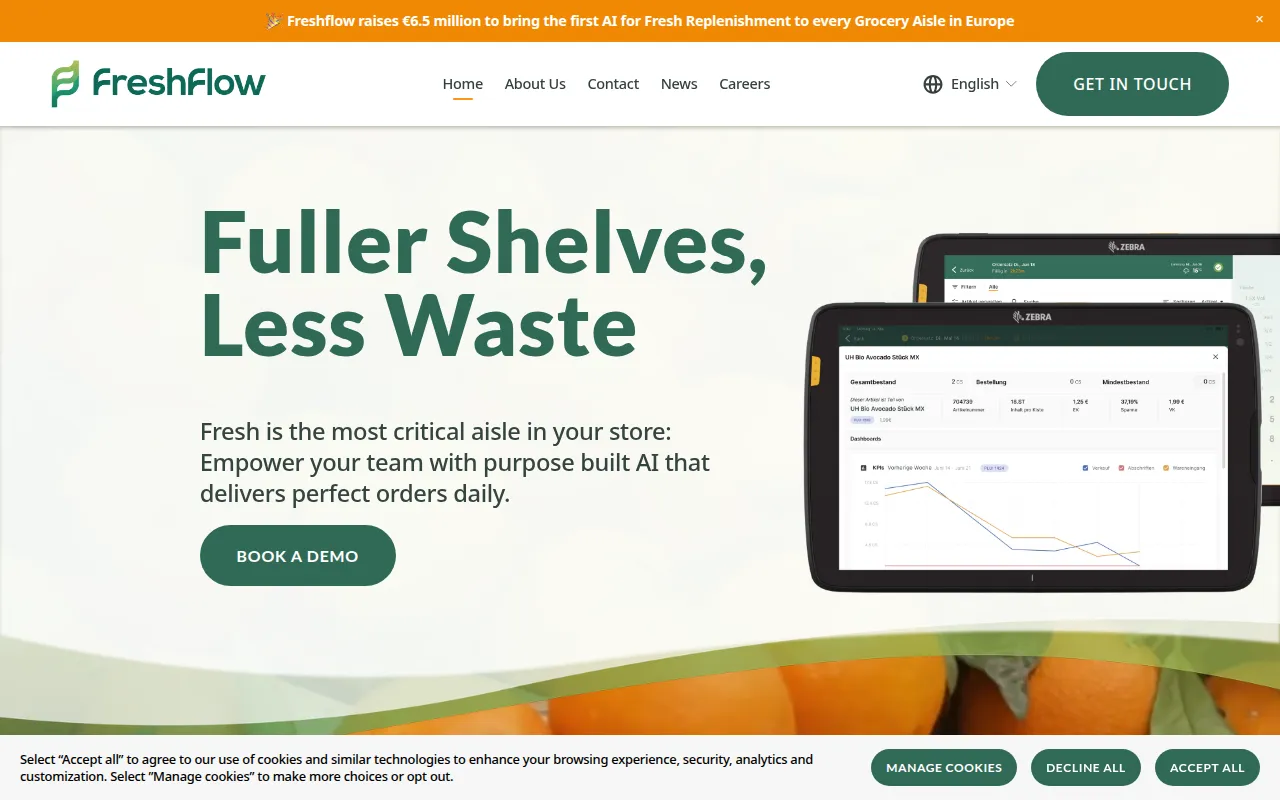
FreshFlow is an AI-driven platform designed for the specific needs of grocery fresh produce departments. It is built to handle the variability of fresh food, including seasonality, weather changes, and short shelf lives.
The software is designed for produce managers who need to determine daily stock levels. It provides order recommendations by analyzing historical data, promotions, and external factors such as local events and weather.
Beyond forecasting, the tool supports inventory maintenance and the management of local suppliers, particularly when dealing with non-standardized item IDs or PLU codes. Managers can review exceptions and override AI recommendations before submitting orders to suppliers.
Buyers should confirm how the system integrates with their specific point-of-sale or inventory software to ensure compatibility with their regional supplier constraints.
Key Features
AI Demand Forecasting
Uses historical data, promotions, and external factors like weather and local events to predict product demand.
Shelf Life and Spoilage Prediction
Analyzes perishable goods to help balance the risk of stock-outs against the risk of food spoilage.
Order Recommendations
Generates daily order suggestions that managers can review, override, and submit to suppliers.
Inventory Management Support
Provides AI-assisted nudges to help produce managers maintain inventory records.
Local Supplier Management
Designed to handle incomplete or non-standardized data associated with local produce sourcing.
Data Handling
Supports the matching of items with varying IDs and the processing of PLU codes.
Use Cases
Daily Produce Ordering
Supporting the process of determining the quantity of fresh produce to order each day to maintain shelf fullness.
Waste Reduction
Using spoilage and shelf-life predictions to help reduce fresh food shrinkage.
Seasonal Planning
Applying AI forecasting to account for seasonality and regionality in fresh produce demand.
Local Sourcing Coordination
Managing orders from local suppliers who may provide data in non-standardized formats.
FAQ
Who is FreshFlow designed for?
- FreshFlow is designed for produce managers and retail businesses operating grocery fresh produce departments.
What challenges does FreshFlow address?
- It is designed to help with unreliable inventories, variable shelf lives, and the impact of seasonality and weather on fresh produce demand.
Does FreshFlow automate all ordering?
- The system provides AI-driven order recommendations and prompts managers to review exceptions, but allows managers to override recommendations before submitting the order.
Source category: Operations
Source subcategory: Analytics & Reporting
More tools in Operations
Other published listings in the Operations category.


More tools in the Analytics and Reporting software type
Related listings that share the same software type for comparison and shortlisting.


