AI TOOL PROFILE
Fluid Attacks: Vulnerability Management Software

- Security
- Vulnerability Management
- Software development teams
- Security teams
- DevSecOps professionals
- Organizations in banking, healthcare, and transportation
Pricing
Pricing was not clearly available from the provided evidence. A 21-day free trial is mentioned; buyers should confirm current pricing and trial terms on the vendor website.
At a glance
- Best for
- Software development teams, Security teams, DevSecOps professionals, Organizations in banking, healthcare, and transportation
- Key use cases
- Vulnerability Detection and Management, DevSecOps Workflow Integration, Risk Exposure Assessment, Manual Security Audits
- Integrations
- IDE integrations, Bug-tracking system integrations, CI/CD pipeline integrations
- Official website
- Visit Fluid Attacks official website
How AI is used
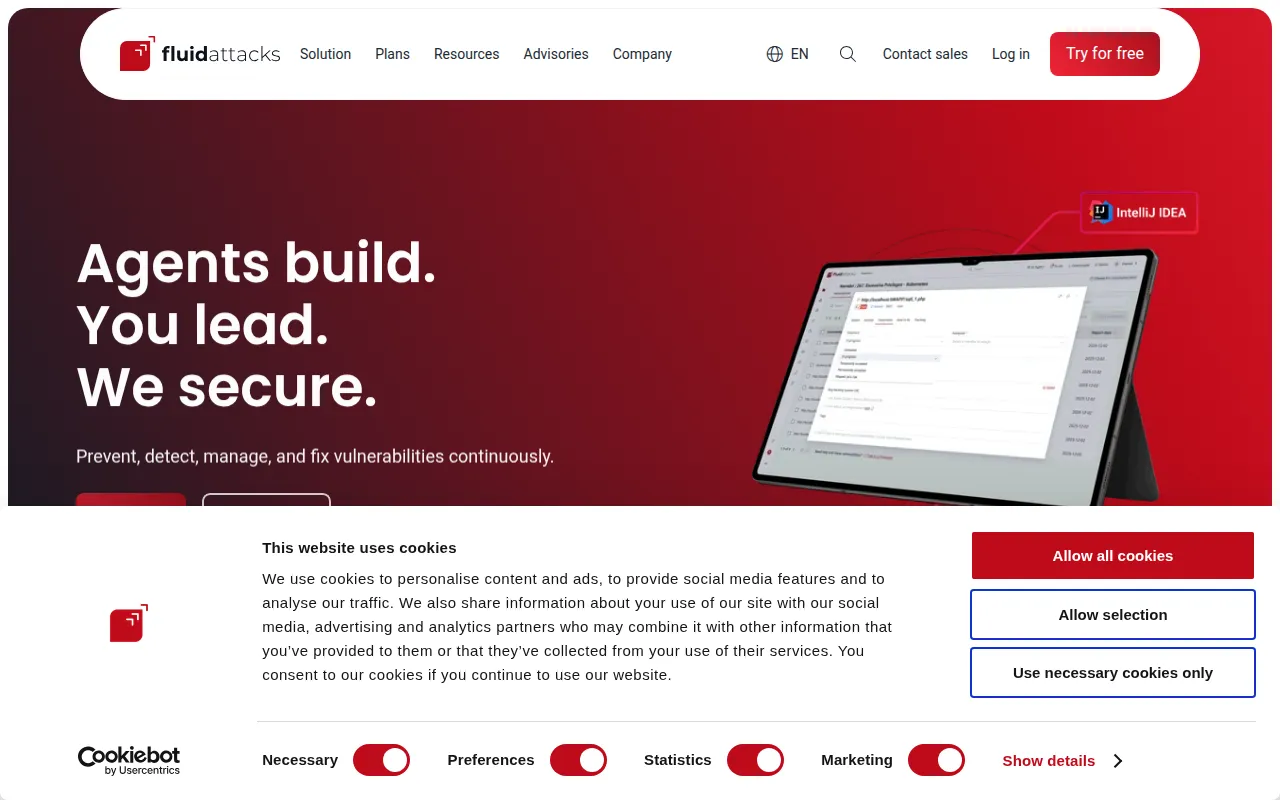
Fluid Attacks is an application security testing platform designed to help development and security teams manage risk across the software development lifecycle. It uses automated tools and human ethical hackers to identify vulnerabilities in web applications, mobile applications, APIs, and infrastructure.
Key Features
Application Security Testing
Supports SAST, AI SAST, SCA, DAST, MAST, CSPM, PTaaS, secure code review, and reverse engineering.
AI-Supported Remediation
Provides guidelines and suggestions for vulnerability remediation through Autofix and Custom Fix with GenAI.
Risk-Based Prioritization
Supports prioritizing fixes based on risk exposure, reachability, and probability of exploitation using EPSS.
Continuous Ethical Hacking
Includes human pentesters to supplement automated tools for discovering security issues.
SBOM Management
Supports the management of a software bill of materials to track supply chain security.
CI/CD Pipeline Integration
Includes a CI Gate that can be used to break the build if security thresholds are not met.
Use Cases
Vulnerability Detection and Management
Identifying security flaws across web, mobile, and API targets using an ASPM platform.
DevSecOps Workflow Integration
Connecting security testing to IDEs and bug-tracking systems to identify issues during development.
Risk Exposure Assessment
Using risk-based prioritization to identify vulnerabilities that may require attention.
Manual Security Audits
Combining automated scans with human pentester reviews for security analysis.
Integrations
- IDE integrations
- Bug-tracking system integrations
- CI/CD pipeline integrations
FAQ
What does Fluid Attacks do?
- It is a security platform that helps organizations identify and fix vulnerabilities in their software using a combination of AI, automated tools, and human pentesters.
Who is this software designed for?
- It is designed for development, security, and DevSecOps teams within various organizations.
Does Fluid Attacks offer a free trial?
- The provided evidence mentions a 21-day free trial.
Source category: Security
Source subcategory: Vulnerability Management
More tools in Security
Other published listings in the Security category.


More tools in the Vulnerability Management software type
Related listings that share the same software type for comparison and shortlisting.