AI TOOL PROFILE
Apiiro | Application Security Posture Management

- Security
- Vulnerability Management
- Enterprise security teams
- Application security engineers
- Software development organizations
- Organizations with complex CI/CD pipelines
Pricing
Pricing was not clearly available from the provided evidence. Buyers should confirm current pricing on the vendor website.
At a glance
- Best for
- Enterprise security teams, Application security engineers, Software development organizations, Organizations with complex CI/CD pipelines
- Key use cases
- Risk Prioritization, Pipeline Protection, Secure-by-Design Planning, Compliance Support
- Integrations
- SCM integration, CI/CD pipeline integration, SAST tools, SCA tools, CSPM tools
- Official website
- Visit apiiro official website
How AI is used
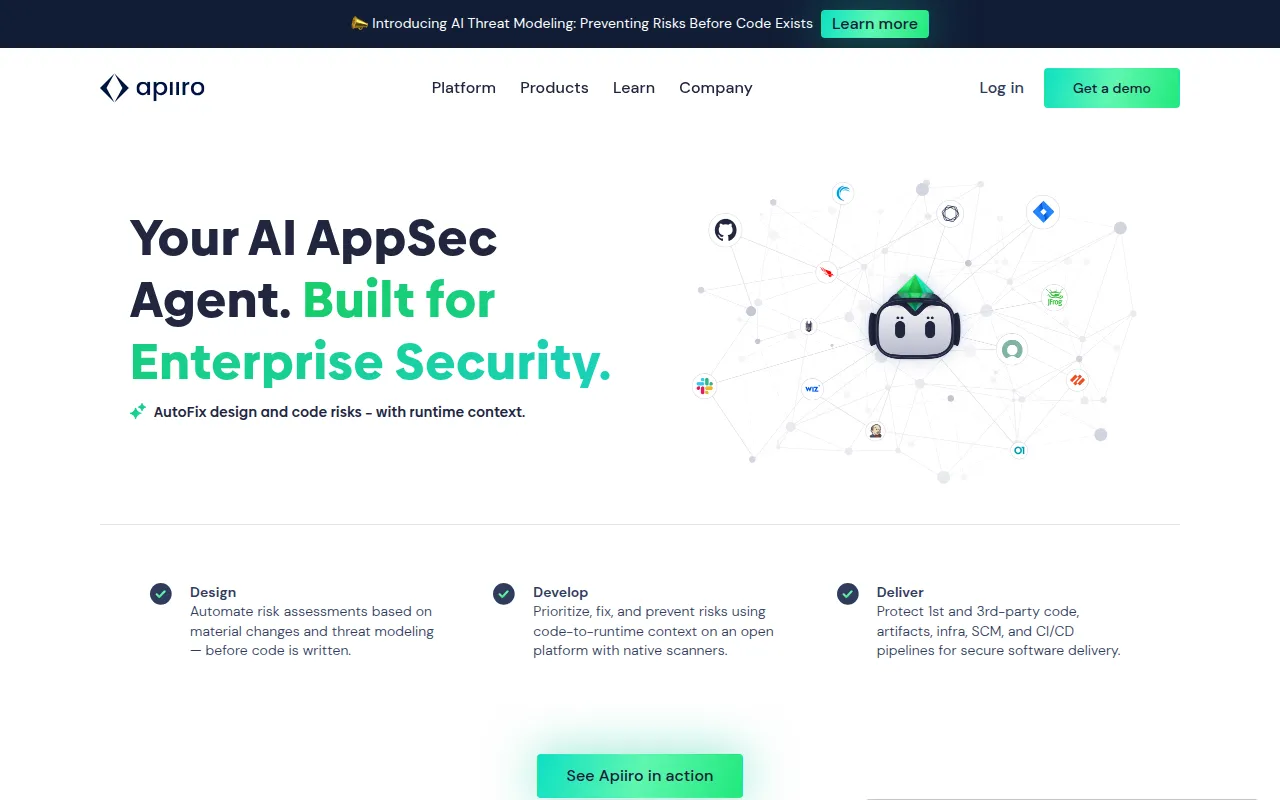
Apiiro is an Application Security Posture Management (ASPM) platform designed for enterprise security teams and developers. It is designed to unify security signals from various scanners—including application, infrastructure, and code quality tools—into a single view to help teams manage their security posture.
The platform uses Deep Code Analysis and a Risk Graph to provide context from the code level through to runtime. This is intended to help security engineers identify which vulnerabilities may pose a risk to the business, rather than treating every alert with equal priority.
Buyers should note that the tool is geared toward environments with complex CI/CD pipelines and large volumes of code repositories. Since the platform integrates with existing security tools and also provides native scanning, buyers should confirm which specific native modules they require.
Key Features
Risk Graph
Correlates security alerts and maps them against application architecture to prioritize risks based on business impact.
Deep Code Analysis (DCA)
Performs semantic analysis of the codebase to identify components, APIs, and data models.
eXtended SBOM (XBOM)
Generates an inventory of application components, including APIs and sensitive data, beyond standard open-source packages.
Code-to-Runtime Context
Links vulnerabilities found in runtime environments back to the specific line of code and owner to support remediation.
AI-Based Threat Modeling
Supports the generation of threats and mitigations during the design phase before code is written.
Native Security Scanners
Includes built-in tools for secrets detection, open source security (SCA), and software supply chain security.
Use Cases
Risk Prioritization
Using application architecture and runtime context to identify which vulnerabilities are reachable and critical.
Pipeline Protection
Embedding risk-based guardrails into pull requests and CI/CD builds to help prevent critical risks from being released.
Secure-by-Design Planning
Detecting potential security risks and running threat models during the design phase of new features.
Compliance Support
Monitoring material code changes to help support regulatory requirements such as PCI v4, NIST, and SOC2.
Integrations
- SCM integration
- CI/CD pipeline integration
- SAST tools
- SCA tools
- CSPM tools
FAQ
What is Apiiro used for?
- Apiiro is used to unify risk visibility and manage the security posture of applications by correlating findings from various security scanners with the application's architecture.
Who is the target buyer for Apiiro?
- It is designed for application security teams, developers, and security engineers within mid-market and enterprise-level software companies.
How does Apiiro differ from standard security scanners?
- While scanners detect vulnerabilities, Apiiro acts as a management layer that provides context on whether a vulnerability is a business risk based on its location and runtime exposure.
Source category: Security
Source subcategory: Vulnerability Management
More tools in Security
Other published listings in the Security category.


More tools in the Vulnerability Management software type
Related listings that share the same software type for comparison and shortlisting.


