AI TOOL PROFILE
SkuNexus: Inventory, Order, and Warehouse Management

- Operations
- Inventory Management
- eCommerce merchants handling their own fulfillment
- Multi-channel retailers
- Businesses with multiple warehouse locations
- High-volume D2C brands
- B2B wholesale distributors
Pricing
Pricing is custom. The model includes no per-user, per-order, per-warehouse, or per-SKU fees. Annual increases are capped at 3%.
At a glance
- Best for
- eCommerce merchants handling their own fulfillment, Multi-channel retailers, Businesses with multiple warehouse locations, High-volume D2C brands, B2B wholesale distributors
- Key use cases
- Multi-Warehouse Fulfillment, Omnichannel Sales Sync, Subscription Box Operations, BOPIS and Ship-from-Store, Branded Dropshipping
- Integrations
- Shopify, Magento, BigCommerce, Amazon, Walmart
- Official website
- Visit skunexus official website
How AI is used
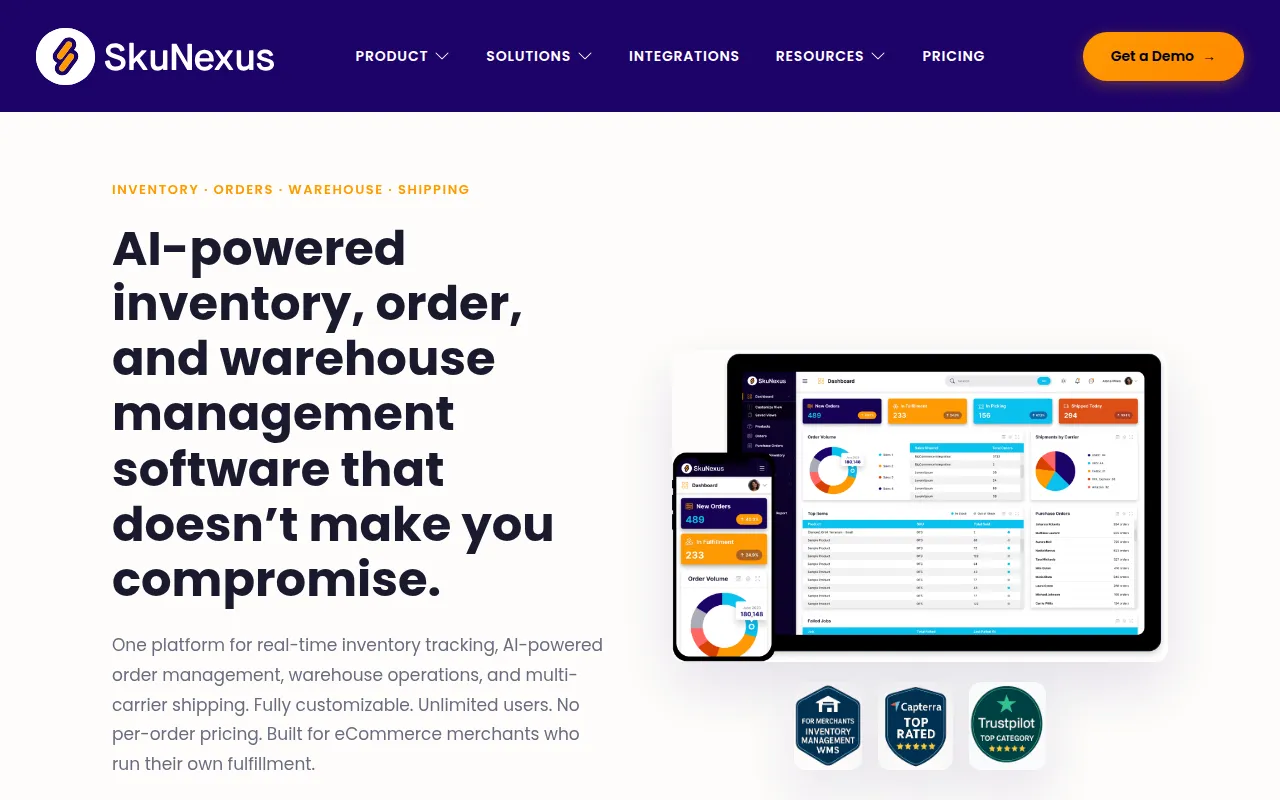
SkuNexus is a unified platform that combines inventory tracking, order management, and warehouse operations. It is designed for eCommerce businesses shipping between 50 and 20,000 orders per day, ranging from D2C brands to multi-channel B2B operations.
The software helps businesses manage stock across multiple locations and sales channels in real time, using AI to route orders to the most efficient fulfillment node. It includes warehouse tools such as wave picking and barcode verification to support physical operations.
For businesses with specific requirements, the platform supports customization, and enterprise customers may receive access to the source code. This is intended to help the software adapt to a business's existing workflows.
Buyers should confirm that they handle their own fulfillment, as the tool is not designed for those who outsource entirely to a 3PL or for very small operations with fewer than 20 SKUs.
Key Features
Real-time Inventory Tracking
Syncs stock levels across warehouses and sales channels using event-driven updates to help prevent overselling.
AI-Driven Order Routing
An automated decision engine that helps determine the fulfillment path based on proximity, costs, and availability.
Warehouse Management Tools
Supports directed putaway, zone-based wave picking, and barcode verification for receiving and picking.
Multi-Carrier Rate Shopping
Compares rates across carriers such as UPS, FedEx, and USPS to help identify cost-effective shipping options.
Demand Forecasting
Analyzes sales velocity and seasonality to support reorder timing and automated purchase order generation.
Kitting and Bundle Management
Tracks component-level inventory and supports assembly work orders for product bundles.
Use Cases
Multi-Warehouse Fulfillment
Managing a single source of truth for inventory spread across several physical warehouse locations.
Omnichannel Sales Sync
Synchronizing stock levels across Shopify, Amazon, eBay, and Walmart to help reduce the risk of overselling.
Subscription Box Operations
Using kitting workflows and automated order processing to handle recurring deliveries.
BOPIS and Ship-from-Store
Routing orders to retail locations to support in-store pickup or local shipping.
Branded Dropshipping
Routing orders directly to vendors and automating purchase order generation without holding physical stock.
Integrations
- Shopify
- Magento
- BigCommerce
- Amazon
- Walmart
- eBay
- QuickBooks
- NetSuite
- Shopware
FAQ
Who is SkuNexus designed for?
- It is built for eCommerce merchants who handle their own fulfillment and typically ship between 50 and 20,000 orders per day.
Does SkuNexus charge for additional users?
- No, the platform supports unlimited users with no per-user fees.
Can SkuNexus handle dropshipping?
- Yes, it supports dropshipping by routing orders to vendors and automating purchase order generation.
How long does implementation take?
- Most implementations go live in approximately 90 days, which includes data migration and staff training.
Source category: Operations
Source subcategory: Inventory Management
More tools in Operations
Other published listings in the Operations category.


More tools in the Inventory Management software type
Related listings that share the same software type for comparison and shortlisting.


