AI TOOL PROFILE
Pipelyft: Sales and Marketing Workflow Automation

- Sales
- Workflow Automation
- Growth-stage companies
- Businesses undergoing M&A
- Companies in digital transformation
- Organizations with fragmented martech stacks
Pricing
Pricing was not clearly available from the provided evidence. Buyers should confirm current pricing on the vendor website.
At a glance
- Best for
- Growth-stage companies, Businesses undergoing M&A, Companies in digital transformation, Organizations with fragmented martech stacks
- Key use cases
- CRM and Marketing Data Sync, Intelligent Lead Routing, Automated Content Execution, Technical Strategy Planning
- Official website
- Visit pipelyft official website
How AI is used
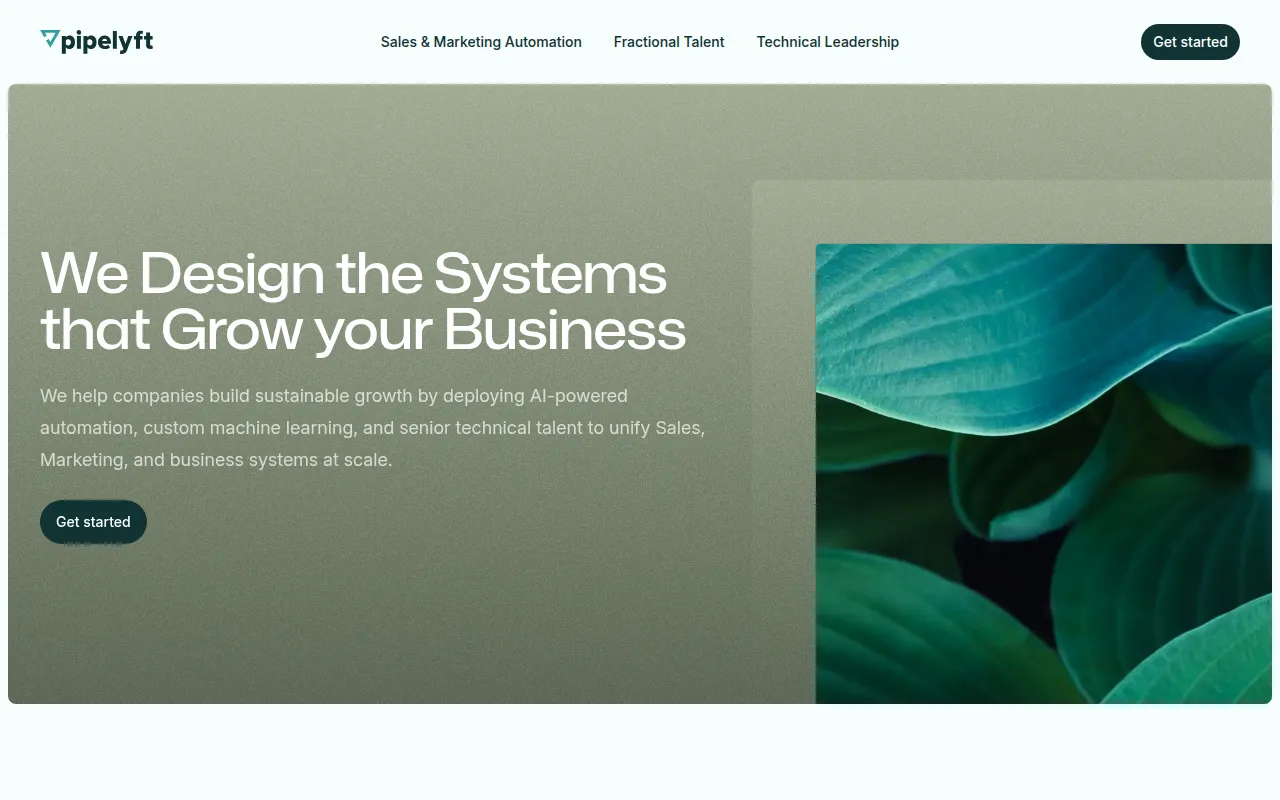
Pipelyft is an automation and technical services provider that helps create an operational layer across a company's existing sales and marketing tools. It is designed to connect disconnected cloud platforms and reduce data silos.
The service is built for growth-stage companies, businesses navigating M&A, or those in the middle of digital transformation initiatives. It combines automation with access to fractional technical leadership, such as CTOs and AI specialists.
Practical applications include automating data flows between CRMs and marketing tools, and implementing AI-assisted lead routing. Buyers should note that this is a service-heavy offering that involves custom design and deployment.
Key Features
AI-Enhanced Workflow Automation
Designs and manages automation that connects existing growth platforms into a single operational layer.
Data Unification
Unifies sales, marketing, and customer data into consistent flows to help reduce silos.
Event-Driven Workflows
Implements workflows that respond to buyer signals to support routing and prioritization.
Fractional Technical Talent
Provides on-demand access to fractional CTOs, AI specialists, and machine learning engineers.
Cross-Platform Reporting
Supports real time reporting and operational alerts driven by events across multiple systems.
Use Cases
CRM and Marketing Data Sync
Automating the synchronization of leads, accounts, and customer data across different platforms.
Intelligent Lead Routing
Using AI-assisted scoring and enrichment to support data routing to the correct teams.
Automated Content Execution
Applying AI-assisted content generation across sales and customer engagement workflows.
Technical Strategy Planning
Using fractional leadership to define technical roadmaps and system architectures.
FAQ
What does Pipelyft do?
- Pipelyft designs and manages AI-enhanced automation that connects existing sales and marketing tools into one operational layer to help reduce data silos.
Do I have to replace my current CRM or marketing tools?
- No, Pipelyft is designed to sit across existing tools and unify them without requiring a replacement of existing software.
Who is this service best suited for?
- It is designed for growth-stage companies, businesses going through M&A, or those needing specialized fractional technical leadership like a CTO.
Source category: Sales
Source subcategory: Workflow Automation
More tools in Sales
Other published listings in the Sales category.


More tools in the Workflow Automation software type
Related listings that share the same software type for comparison and shortlisting.


