AI TOOL PROFILE
Fiorano: Integration and API Management Software

- Software Development
- Message Queue
- Mid-Market Companies
- Enterprise Companies
- Banking and Financial Services
- Healthcare
- Logistics
Pricing
Pricing is flexible and adapts to scale and usage, with monthly subscription and enterprise licensing options. Pricing was not clearly available from the provided evidence; buyers should confirm current pricing on the vendor website.
At a glance
- Best for
- Mid-Market Companies, Enterprise Companies, Banking and Financial Services, Healthcare, Logistics
- Key use cases
- Event-Driven Application Development, Legacy and Cloud System Connectivity, Enterprise System Integration, Automating Integration Tasks
- Integrations
- Salesforce, SAP, SWIFT
- Official website
- Visit fioranomq official website
How AI is used
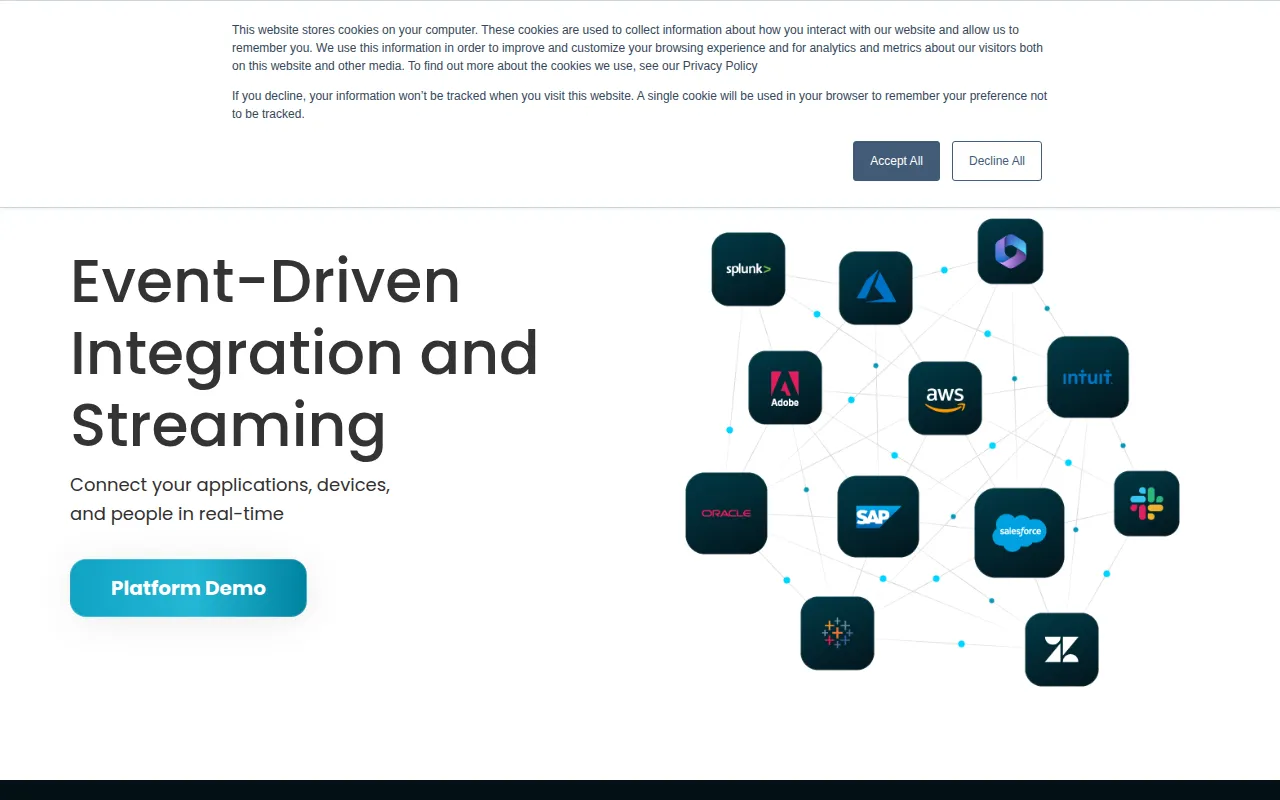
Fiorano is a cloud-native integration platform designed to connect applications, devices, and people. It includes an integration platform, API management, and FioranoMQ for messaging.
The software is built for mid-market and enterprise organizations in sectors such as banking, healthcare, and logistics. It supports the development of scalable event-driven applications and the automation of repetitive integration tasks.
Key capabilities include no-code and low-code development tools, which may help teams build and deploy workflows. The platform supports hybrid and multi-cloud deployments, allowing it to work across private and public environments.
Buyers should confirm if the technical requirements match their internal team's expertise. Since pricing is flexible and based on usage, companies should request a quote based on their specific scale.
Key Features
No-code and Low-code Workflows
Provides tools to build and deploy integration flows using a visual approach.
API Management
Supports the API lifecycle with built-in security and monitoring tools.
Visual Data Mapping
Includes a visual tool for mapping data between different systems and formats.
Distributed Peer-to-Peer Architecture
Uses a non-centralized architecture designed to handle scalability and reduce single points of failure.
Power AI Agents
Includes automation agents designed to help automate tasks and optimize performance.
Zero Downtime Deployments
Supports system upgrades and scaling without interrupting active operations.
Role-Based Access Control
Provides granular permissions to manage user access to specific data.
Use Cases
Event-Driven Application Development
Building scalable applications that respond to real time events and data streaming.
Legacy and Cloud System Connectivity
Connecting on-premises legacy systems with cloud applications and IoT devices.
Enterprise System Integration
Synchronizing data between platforms such as Salesforce, SAP, and internal financial applications.
Automating Integration Tasks
Using no-code workflows to handle repetitive data synchronization and transfer tasks.
Integrations
- Salesforce
- SAP
- SWIFT
FAQ
Who is Fiorano designed for?
- Fiorano is designed for mid-market and enterprise companies, particularly those in banking, healthcare, and logistics that manage complex system integrations.
Does Fiorano support no-code development?
- Yes, it offers no-code and low-code development tools that allow users to build and deploy integration flows visually.
How is Fiorano priced?
- Fiorano uses a flexible licensing model based on scale and usage, including monthly subscriptions and enterprise licensing.
Can Fiorano be deployed on-premises?
- Yes, the platform supports on-premises, hybrid, and multi-cloud deployment options.
Source category: Software Development
Source subcategory: Message Queue
More tools in Software Development
Other published listings in the Software Development category.


