AI TOOL PROFILE
EazyStock Inventory Optimization Software

- Operations
- Inventory Management
- Wholesalers
- Distributors
- Retailers
- Manufacturers
- Small to mid-sized businesses
Pricing
Pricing was not clearly available from the provided evidence. Buyers should confirm current pricing on the vendor website.
At a glance
- Best for
- Wholesalers, Distributors, Retailers, Manufacturers, Small to mid-sized businesses
- Key use cases
- Demand Forecasting, Stock Level Optimization, Replenishment Automation, Seasonal Planning
- Integrations
- Microsoft Dynamics NAV, Microsoft Business Central, NetSuite, Acumatica, Epicor
- Official website
- Visit eazystock official website
How AI is used
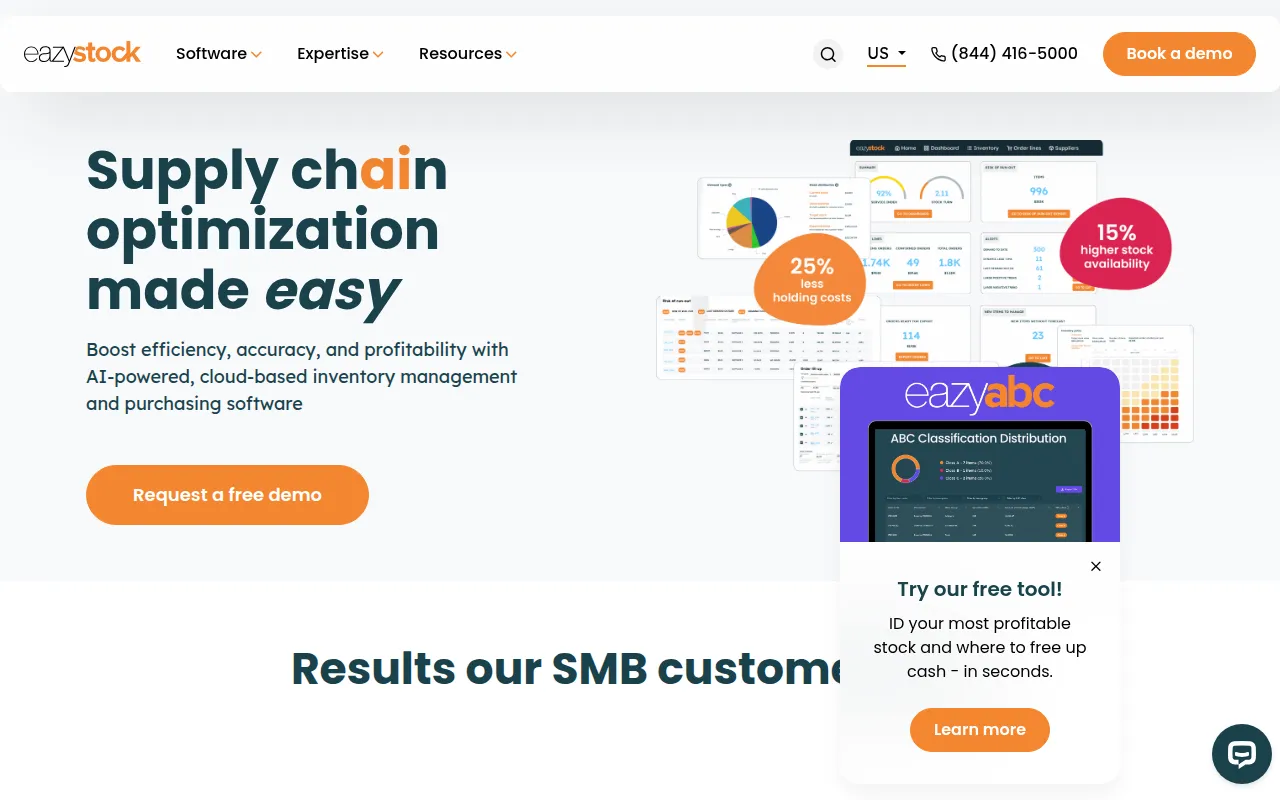
EazyStock is a cloud-based software designed to help optimize inventory levels by connecting with a company's existing ERP system. It uses machine learning to analyze demand profiles and generate order proposals, which helps businesses balance stock to meet customer demand.
The tool is designed for small to mid-sized businesses in the wholesale, distribution, retail, and manufacturing sectors. Its workflow focuses on connecting to data, forecasting demand, optimizing inventory parameters, and generating supplier orders.
Buyers should note that the software depends on the quality of data provided by their ERP. As it is designed as an add-on to a business system, users should confirm that their specific ERP is compatible with EazyStock's connectors to ensure data synchronization.
Key Features
AI-Powered Forecasting
Uses machine learning algorithms to predict demand and identify trends or seasonal variations.
Automated Replenishment
Generates order proposals and schedules supplier orders based on calculated stock needs.
Multi-location Management
Supports inventory planning and stock level management across different physical locations.
Sales Promotion Forecasting
Helps predict how specific sales promotions may impact inventory demand.
ERP Integration
Connects to existing enterprise resource planning systems to sync master data and transactional demand.
AI Help Assistant
An integrated AI tool that allows users to ask questions about their inventory.
Use Cases
Demand Forecasting
Analyzing historical sales and production orders to predict future stock requirements.
Stock Level Optimization
Calculating safety stock levels and reorder points to help maintain availability.
Replenishment Automation
Automating the creation of purchase orders for suppliers to reduce manual calculations.
Seasonal Planning
Adjusting inventory levels to account for known seasonal demand peaks.
Integrations
- Microsoft Dynamics NAV
- Microsoft Business Central
- NetSuite
- Acumatica
- Epicor
- Visma
- Merlin
- SAP
- Pyramid
- SouthWare
- Intuit Quickbooks
- Monitor
- Opera
FAQ
What does EazyStock do?
- EazyStock is a cloud-based tool that connects to your ERP to support demand forecasting, calculate stock levels, and generate replenishment orders.
Who is EazyStock designed for?
- It is designed for small to mid-sized wholesalers, distributors, retailers, and manufacturers.
Does EazyStock work with my ERP?
- EazyStock has connectors for several ERPs, including NetSuite, Microsoft Business Central, and SAP; however, buyers should confirm their specific system is supported.
Source category: Operations
Source subcategory: Inventory Management
More tools in Operations
Other published listings in the Operations category.


More tools in the Inventory Management software type
Related listings that share the same software type for comparison and shortlisting.


