AI TOOL PROFILE
eAgronom: Farm Management and Sustainability Software

- Other
- Farm Management
- Farms
- Agricultural businesses
- Food sector companies
- Regenerative agriculture practitioners
Pricing
Pricing was not clearly available from the provided evidence. Buyers should confirm current pricing on the vendor website.
At a glance
- Best for
- Farms, Agricultural businesses, Food sector companies, Regenerative agriculture practitioners
- Key use cases
- Improving Soil Health, Generating New Revenue, Corporate Sustainability Reporting, Accessing Green Finance
- Official website
- Visit eagronom official website
How AI is used
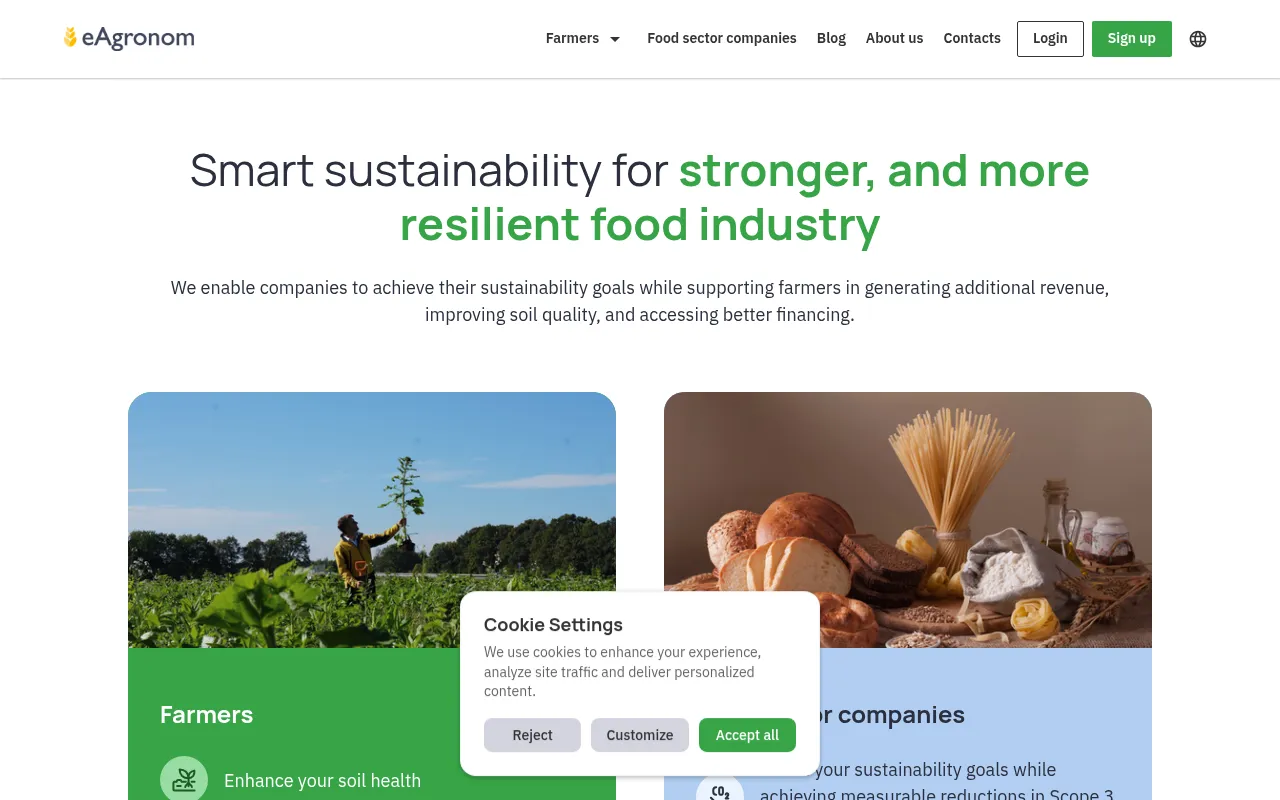
eAgronom is a farm management and sustainability platform designed for the agricultural sector. It provides tools for data collection and agronomic expertise to help farmers implement regenerative practices that may improve soil quality and open revenue streams through carbon credits.
The software is intended for farmers who want to enhance their soil health and financial stability, and food sector companies aiming to meet sustainability goals. For companies, the platform focuses on achieving measurable reductions in Scope 3 emissions.
Key capabilities include automated data gathering from tractor cabins and project development aligned with the Verra VM0042 standard. This structure is designed to ensure that carbon projects are registered and credits are issued based on recognized standards.
Buyers should confirm if their specific region is supported, as the platform operates across selected countries in Europe and Africa, and verify how the automated data collection fits into their existing machinery setup.
Key Features
Automated Data Collection
Uses AI-based systems to gather data from tractor cabins to reduce manual entry.
Carbon Credit Generation
Supports the development of carbon projects under the Verra VM0042 standard.
Regenerative Agronomic Support
Provides expertise and interventions designed to improve soil health and quality.
Sustainable Financing
Supports access to sustainable loans and leases for farmers adopting green practices.
Scope 3 Emissions Tracking
Designed to help food sector companies measure and reduce emissions within their supply chain.
Use Cases
Improving Soil Health
Farmers can use the platform's agronomic expertise to implement regenerative interventions.
Generating New Revenue
Farmers may use the Carbon Program to generate and issue carbon credits.
Corporate Sustainability Reporting
Food industry companies can use the platform to track and reduce Scope 3 emissions.
Accessing Green Finance
Farmers can use the platform to access sustainable loans and leases.
FAQ
What does eAgronom do?
- eAgronom provides a platform for farmers to improve soil health and generate carbon credits, while helping food companies reduce their Scope 3 emissions.
How does the platform collect data?
- The platform uses AI-based automatic data collection systems designed to gather data from tractor cabins.
Is eAgronom suitable for all farmers?
- It is designed for farmers in 13 countries across Europe and Africa who are interested in regenerative agriculture and carbon farming.
What standards does eAgronom use for carbon credits?
- eAgronom develops projects under the Verra VM0042 standard for soil carbon.
Source category: Other
Source subcategory: Farm Management
More tools in Other
Other published listings in the Other category.


