AI TOOL PROFILE
Cortex | Engineering Operations Platform

- Software Development
- DevOps Platform
- Software companies
- Enterprise engineering organizations
- Platform engineering teams
- SRE teams
- Engineering leadership
Pricing
Pricing was not clearly available from the provided evidence. Buyers should confirm current pricing on the vendor website.
At a glance
- Best for
- Software companies, Enterprise engineering organizations, Platform engineering teams, SRE teams, Engineering leadership
- Key use cases
- Improving Operational Maturity, Standardizing Service Creation, Managing Infrastructure Migrations, AI Assistant Implementation
- Integrations
- GitHub, GitLab, AWS, Azure, Google Cloud
- Official website
- Visit Cortex official website
How AI is used
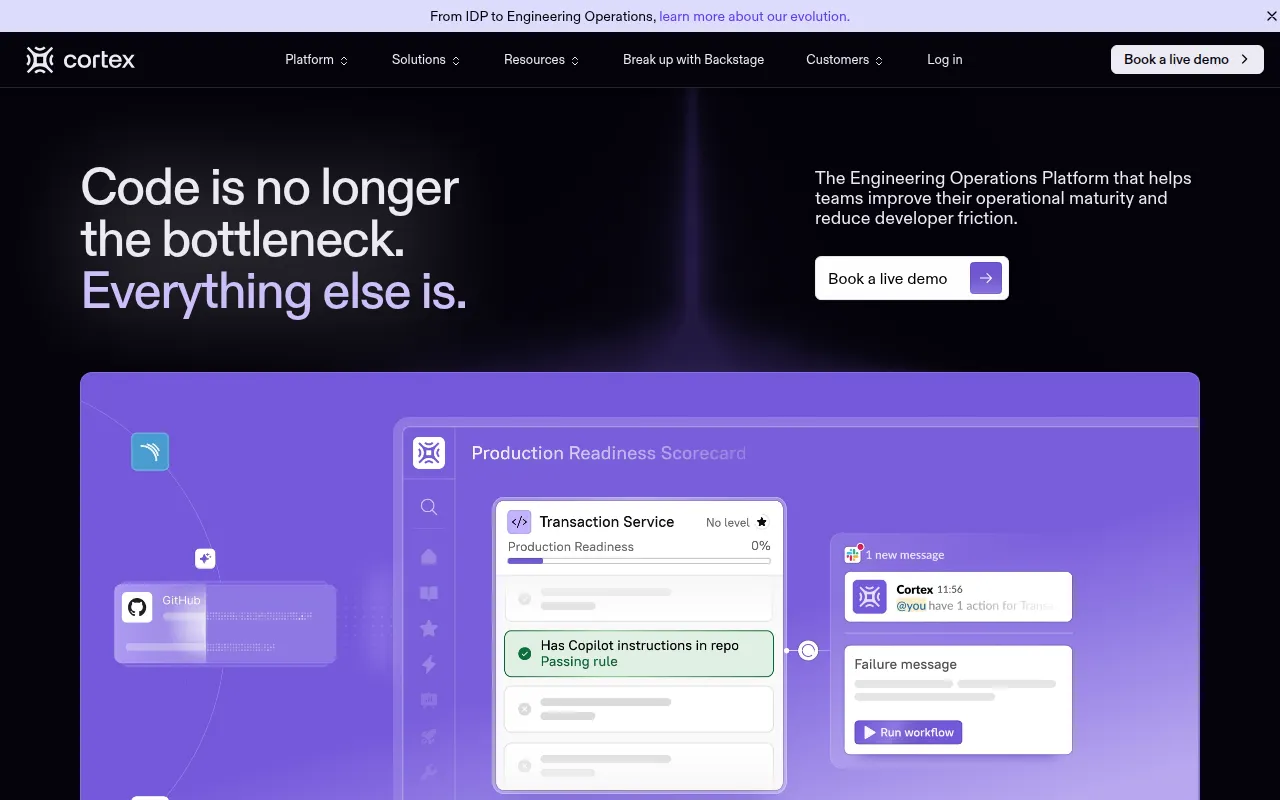
Cortex is an Engineering Operations platform that centralizes data from across a software stack to provide visibility into the health and ownership of services. It is designed for engineering leaders, SRE teams, and platform engineers who manage complexity in larger software ecosystems.
The tool helps organizations implement "golden paths" and production readiness standards, which may reduce the manual tracking and repetitive coordination typically managed in spreadsheets. It also supports the rollout of AI coding assistants with specific security and ownership guardrails.
Buyers should consider their current level of tool sprawl and whether they have established reliability standards they wish to enforce. Since pricing is customized, organizations will need to provide specific team details to receive a proposal.
Key Features
Production Readiness
Tracks whether services meet reliability and operational standards before critical events.
Developer Self-Service
Automates tasks such as service scaffolding, migrations, and infrastructure provisioning.
AI Adoption
Supports the rollout of AI coding assistants with integrated security and ownership standards.
Software Catalogs
Provides a central source of truth for every service, team, and infrastructure resource.
Scorecards
Provides visibility into gaps in operational maturity and trends in engineering excellence.
Use Cases
Improving Operational Maturity
Using scorecards and catalogs to identify which services are missing critical reliability components.
Standardizing Service Creation
Implementing golden paths and automated workflows for scaffolding new services to maintain consistency.
Managing Infrastructure Migrations
Supporting large-scale migrations, such as moving database instances, through automated tracking.
AI Assistant Implementation
Deploying AI coding tools across an engineering organization with governance standards.
Integrations
- GitHub
- GitLab
- AWS
- Azure
- Google Cloud
- Jira
- Slack
- Datadog
- PagerDuty
- Sentry
- Kubernetes
FAQ
What is Cortex used for in software engineering?
- Cortex is used to track operational maturity, manage production readiness standards, and provide self-service automation for scaffolding and infrastructure.
Who are the primary users of Cortex?
- The platform is designed for Engineering Leaders, Platform Teams, SREs, and Developers within software and enterprise companies.
How does Cortex handle pricing?
- Cortex provides customized proposals tailored to the specific size and needs of an engineering team rather than public pricing.
Source category: Software Development
Source subcategory: DevOps Platform
More tools in Software Development
Other published listings in the Software Development category.


More tools in the DevOps Platform software type
Related listings that share the same software type for comparison and shortlisting.