AI TOOL PROFILE
Amber: Supply Chain Management Software

- Operations
- ERP
- Brands with global supply chains
- Retailers
- Global importers
- Product-centric businesses
Pricing
Pricing was not clearly available from the provided evidence. Buyers should confirm current pricing on the vendor website.
At a glance
- Best for
- Brands with global supply chains, Retailers, Global importers, Product-centric businesses
- Key use cases
- New Product Launch, Supplier Collaboration, Logistics Coordination, Operational Data Retrieval
- Integrations
- Email, ERP, PLM, SCM
- Official website
- Visit amber official website
How AI is used
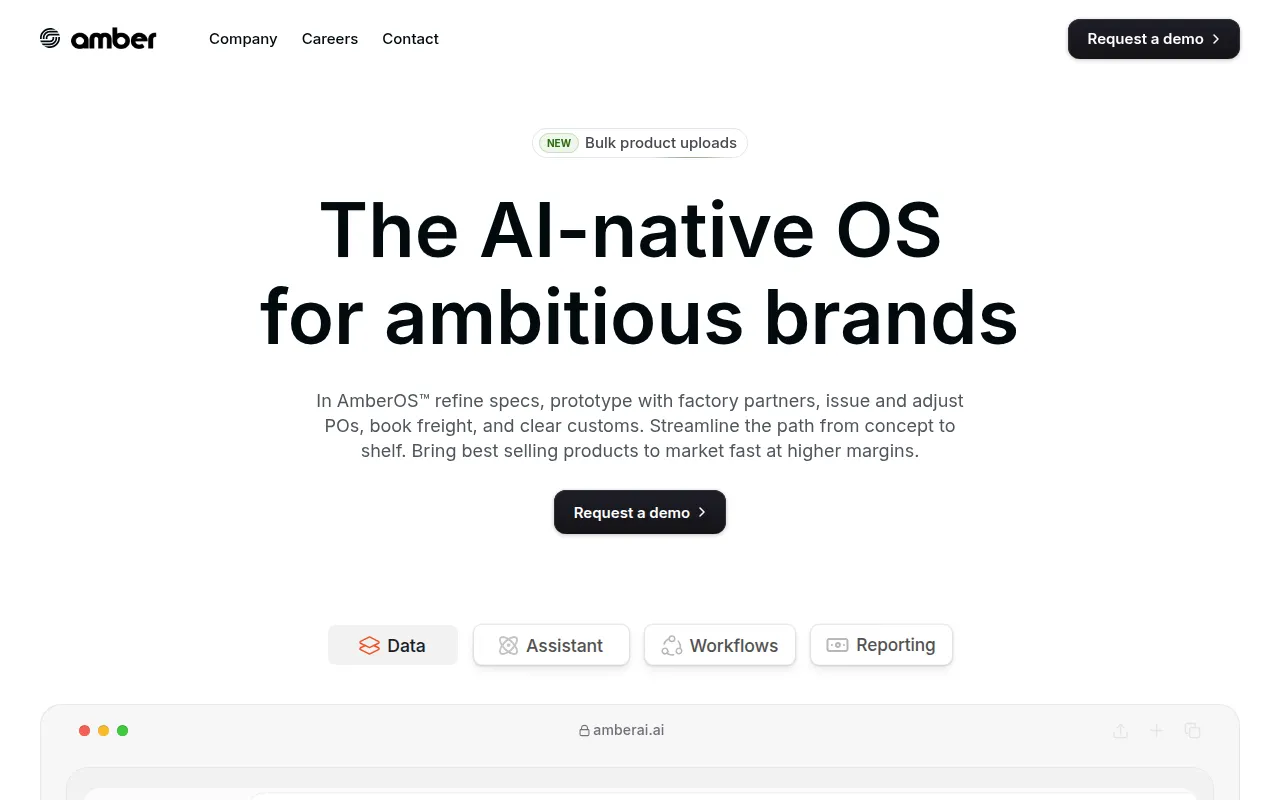
Amber (AmberOS) is a supply chain management platform built for brands, retailers, and importers who source products globally. It supports the product lifecycle from initial concept and prototyping to purchase orders and final delivery.
The software is designed for companies in categories such as fashion, footwear, furniture, and cosmetics. It helps coordinate between product development, sourcing, finance, and logistics by consolidating data that often resides in emails and spreadsheets.
Users can manage supplier relationships through a dedicated portal, refine product specifications, and book air or ocean freight. The system includes AI-driven tools to answer operational questions and provide alerts for important events.
Buyers should note that certain features, such as customs declarations and product data sync to sales channels, are listed as upcoming. Pricing was not clearly available from the provided evidence. Buyers should confirm current pricing on the vendor website.
Key Features
Supplier Management
Includes a supplier portal with native language translation and voice agents to help reduce communication barriers.
Freight and Customs Management
Provides access to ocean and air freight rates and supports digital management of customs processes.
AI Data Assistant
Allows users to ask operational questions about products, suppliers, purchase orders, and payments using natural language.
Product Development Tools
Supports refining product specifications, managing factory prototyping, and issuing purchase orders.
Financial Tools
Includes features designed to help reduce international wire costs for factory payments and optimize tariffs.
Actionable Alerts
Uses AI to provide notifications regarding important supply chain events.
Use Cases
New Product Launch
Supporting the path from concept to shelf by refining specs and managing prototypes with factory partners.
Supplier Collaboration
Vetting and communicating with global suppliers through a unified portal.
Logistics Coordination
Booking freight and tracking shipments from origin to destination.
Operational Data Retrieval
Using a natural language assistant to retrieve data on POs, shipments, and payments.
Integrations
- ERP
- PLM
- SCM
FAQ
Who is AmberOS designed for?
- It is designed for brands, retailers, and importers with global supply chains, particularly those in footwear, fashion, furniture, and cosmetics.
How does the AI assistant work in Amber?
- The AI assistant allows users to ask questions in natural language about products, suppliers, POs, and payments to get operational answers.
Does Amber integrate with other business software?
- Yes, it is designed to connect with existing email, ERP, PLM, and SCM systems.
What is the pricing for Amber?
- Specific pricing tiers are not publicly listed; buyers must request a demo for pricing information.
Source category: Operations
Source subcategory: ERP
More tools in Operations
Other published listings in the Operations category.


More tools in the ERP software type
Related listings that share the same software type for comparison and shortlisting.