AI TOOL PROFILE
MaxMind GeoIP2: IP Geolocation and Fraud Prevention

- Security
- Identity Verification
- Developers
- Startups
- Small and medium-sized businesses
- Enterprises
Pricing
Pricing is usage-based, starting as low as $0.005 per query with no monthly minimum or commitment. A free trial is available.
At a glance
- Best for
- Developers, Startups, Small and medium-sized businesses, Enterprises
- Key use cases
- Fraud and Chargeback Mitigation, Regional Content Customization, Regulatory Compliance, Access Control
- Official website
- Visit MaxMind GeoIP2 official website
How AI is used
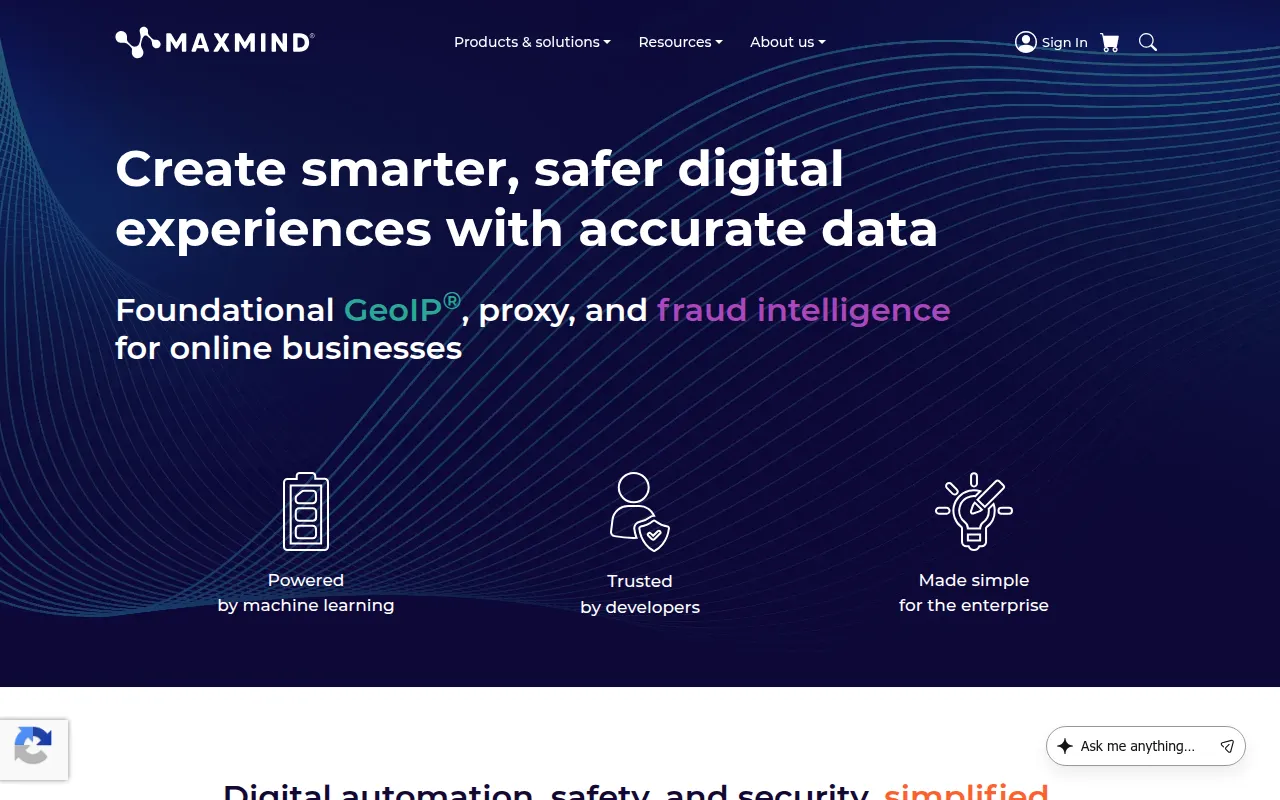
MaxMind is a suite of data services focused on IP intelligence. It provides tools to determine where a user is located, whether they are using a VPN or proxy, and the likelihood that a transaction is fraudulent.
The service is designed for a wide range of users, from developers and startups to medium-sized businesses and large enterprises. It supports three primary workflows: fraud prevention through risk scoring, regional content customization via geolocation, and access control using anonymous IP detection.
Buyers should consider whether they prefer a database-style implementation or an API-driven approach, as MaxMind offers both. Because it operates on a usage-based model, businesses should estimate their monthly query volume to forecast costs.
Key Features
minFraud Risk Scoring
An API that uses machine learning to provide risk score data and insights to help identify potential fraud.
IP Geolocation
Provides data to determine the approximate physical location of an IP address for content customization.
Proxy and VPN Detection
Identifies the use of VPNs, proxies, and other anonymizers to help manage unauthorized access.
Machine Learning Analysis
Utilizes machine learning to analyze transaction data and identify cyber threats.
Use Cases
Fraud and Chargeback Mitigation
Using risk scores to flag high-risk transactions and potentially reduce manual reviews.
Regional Content Customization
Serving specific ads, media, or language options based on the visitor's detected region.
Regulatory Compliance
Helping businesses navigate regional digital rights and regulatory requirements based on user location.
Access Control
Detecting and blocking users who are accessing services through anonymous proxies or VPNs.
FAQ
What does MaxMind GeoIP2 do?
- It provides data on the location of IP addresses, detects the use of VPNs and proxies, and offers risk scores to help identify fraudulent online transactions.
How is MaxMind priced?
- It uses a usage-based model starting at $0.005 per query, with no monthly minimums or long-term commitments required.
Is there a free trial for MaxMind?
- Yes, the company provides a free trial for users to test the services.
Who is this software best for?
- It is designed for a broad range of users, including developers, startups, and SMBs who need to verify user locations or mitigate online fraud.
Source category: Security
Source subcategory: Identity Verification
More tools in Security
Other published listings in the Security category.


More tools in the Identity Verification software type
Related listings that share the same software type for comparison and shortlisting.