AI TOOL PROFILE
CrowdSec: Collaborative Cybersecurity and Threat Intelligence

- Security
- Cybersecurity
- Small Businesses
- Mid-Market Companies
- Enterprise Companies
- MSSPs
- Hosting Providers
Pricing
A free Community plan is available. Paid options include the IP Reputation API starting at $49/month, individual blocklists starting at $900/month, and unlimited access at $3,900/month.
At a glance
- Best for
- Small Businesses, Mid-Market Companies, Enterprise Companies, MSSPs, Hosting Providers
- Key use cases
- Blocking Mass Exploitation Attempts, Reducing Security Alert Noise, Automating Threat Remediation, Supporting SOC Efficiency
- Integrations
- Palo Alto, Fortinet, Sophos, Cisco, Cloudflare
- Official website
- Visit crowdsec official website
How AI is used
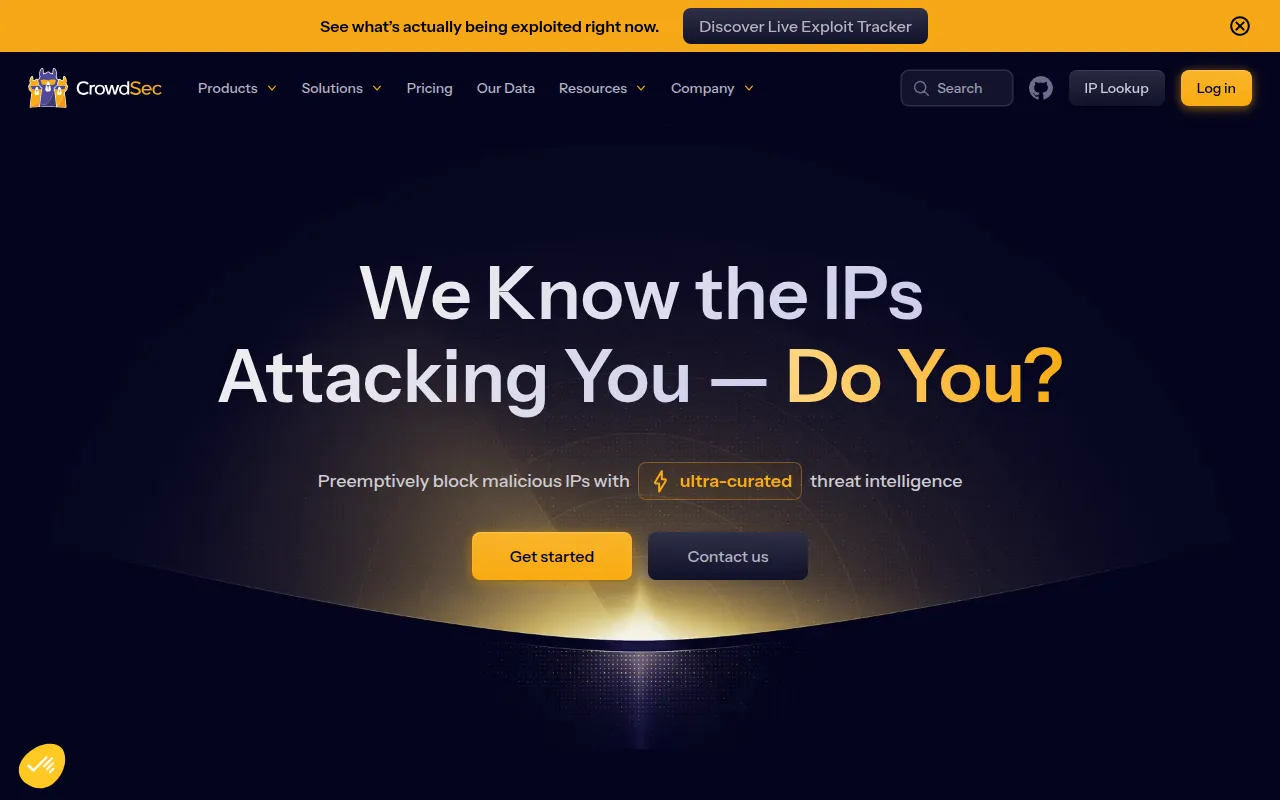
CrowdSec is a cybersecurity platform designed to detect and block malicious IP addresses by leveraging a crowd-sourced network of users who share threat signals. It includes an open-source security engine, a management console, and remediation components used to identify aggressive behaviors.
The tool is designed for a range of users, from small businesses to large enterprises, including hosting providers and financial institutions. It supports both infrastructure and application security, functioning as an intrusion detection system and a web application firewall.
By using curated blocklists, the platform helps teams block mass exploitation attempts. It is designed to integrate with firewalls and CDNs, allowing identified threats to be blocked across the infrastructure.
Buyers should confirm if their current security stack supports the specific remediation components required for their environment and whether the threat intelligence tiers align with their budget.
Key Features
AI-Driven IP Blocklists
Curated lists of malicious IPs designed to help identify threats before they reach the server.
Crowd-Sourced Threat Data
A collaborative network where users share signals on aggressive IPs to improve collective security.
Open-Source Security Engine
An intrusion detection system that analyzes logs and requests locally to identify malicious behaviors.
CrowdSec Console
A management interface for insights, visualizations of alerts, and centralized engine management.
Remediation Components
Components that enforce blocking decisions across various platforms, such as firewalls and CDNs.
AppSec Component
A Web Application Firewall (WAF) capability designed to protect web applications from vulnerabilities.
Use Cases
Blocking Mass Exploitation Attempts
Using curated blocklists to stop known malicious IPs from reaching servers and applications.
Reducing Security Alert Noise
Filtering out common internet background noise to help security teams focus on critical threats.
Automating Threat Remediation
Integrating threat intelligence with firewalls or CDNs to block IPs identified by the community.
Supporting SOC Efficiency
Applying threat intelligence to help reduce the volume of alerts a Security Operations Center needs to manually review.
Integrations
- Palo Alto
- Fortinet
- Sophos
- Cisco
- Cloudflare
- AWS WAF
- Google Cloud Armor
- Nginx
- WordPress
- Drupal
- Magento
FAQ
How does CrowdSec differ from traditional blocklists?
- CrowdSec uses a collaborative network of real users and production environments to share signals, rather than relying solely on honeypots or third-party scraped data.
Is CrowdSec's security engine free?
- Yes, the Security Engine is open-source under the MIT license and is free for users to download and execute.
What are the pricing options for threat intelligence?
- The IP Reputation API starts at $49/month, individual blocklists start at $900/month, and unlimited blocklist access is $3,900/month.
Does CrowdSec support GDPR compliance?
- Yes, the Security Engine performs analysis locally, which helps ensure logs do not leave the user's infrastructure.
Source category: Security
Source subcategory: Cybersecurity
More tools in Security
Other published listings in the Security category.


More tools in the Cybersecurity software type
Related listings that share the same software type for comparison and shortlisting.