AI TOOL PROFILE
AppGate Review: Zero Trust Network Access Software

- Security
- Zero Trust Security
- Enterprise companies
- Government agencies
- Highly regulated industries
- Organizations with complex hybrid IT environments
Pricing
Pricing was not clearly available from the provided evidence. A 30-day free trial is offered with no fees or contracts. Buyers should confirm current pricing on the vendor website.
At a glance
- Best for
- Enterprise companies, Government agencies, Highly regulated industries, Organizations with complex hybrid IT environments
- Key use cases
- VPN Replacement, Securing OT/IoT Access, SaaS and Cloud Application Access, Securing Agentic AI Workloads, Third-Party Access Management
- Integrations
- IAM, Directory Services, EDR, SIEM, ITSM
- Official website
- Visit appgate official website
How AI is used
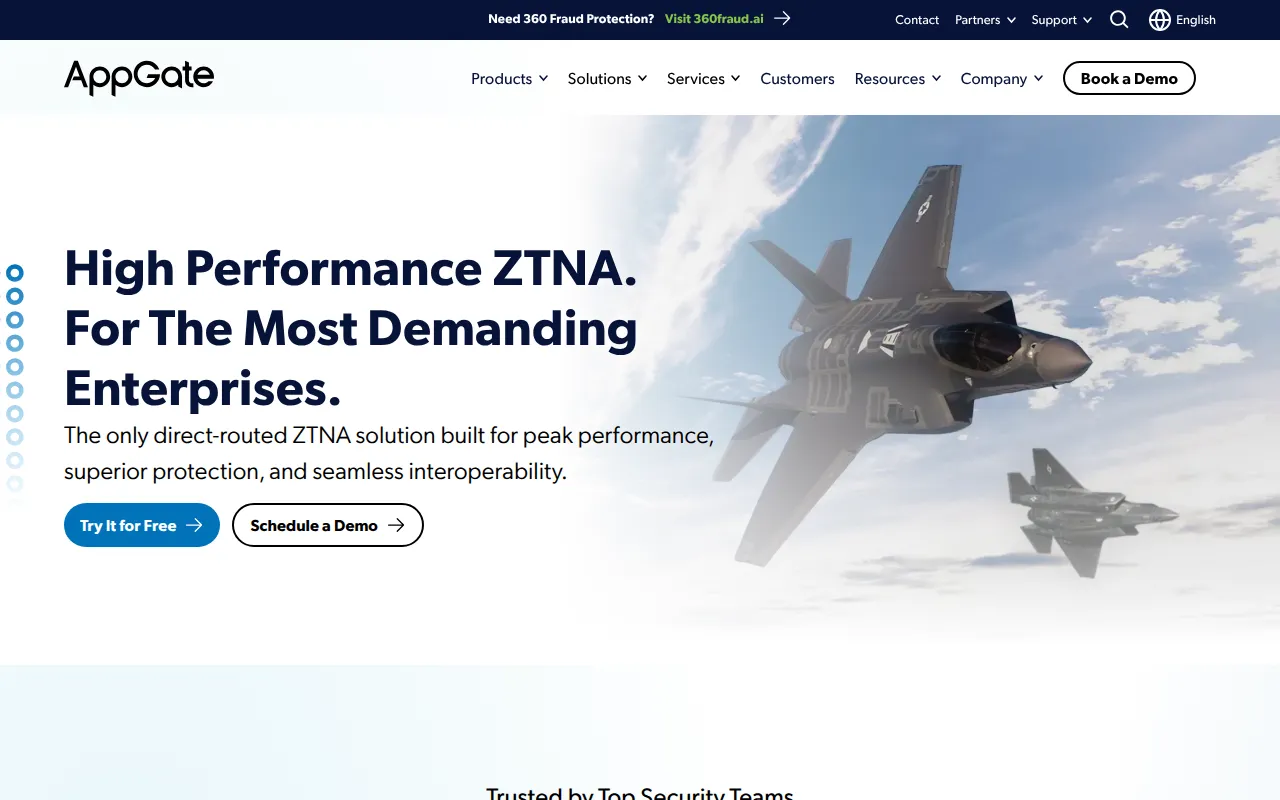
AppGate is a Zero Trust Network Access (ZTNA) platform designed to secure resources across on-premises, cloud, and SaaS environments. It uses a direct-routed architecture that connects users directly to resources, which may help reduce latency and avoid cloud-based bottlenecks.
The software is designed for enterprises and government agencies, including those in regulated sectors like healthcare, finance, and energy. It supports the principle of least privilege by using identity-based policies and session-based microperimeters to help limit lateral movement within a network.
Key capabilities include a risk scoring engine and AI-powered discovery of applications to help administrators manage access entitlements. It supports multiple deployment models, including cloud-hosted, self-hosted, and isolated environments to fit different security requirements.
Buyers should confirm if their internal IT expertise aligns with the management of a software-defined perimeter, as the tool is intended for enterprise-scale environments.
Key Features
Direct-routed Architecture
Routes connections directly between users and resources to avoid third-party cloud bottlenecks.
Identity-Based Policies
Enforces access rules based on the verified identity of the user, device, and context.
AI-powered Application Discovery
Uses AI to discover applications and access patterns to provide entitlement recommendations.
Single Packet Authorization (SPA)
Helps cloak infrastructure by making resources invisible to unauthorized users until trust is validated.
Session-based Microperimeters
Creates just-in-time 1-1 connections between users and specific authorized resources.
AppGate Risk Sentinel
A risk scoring engine that analyzes real time user and device context to support adaptive policies.
Use Cases
VPN Replacement
Supports the transition from traditional VPNs to secure remote access based on identity.
Securing OT/IoT Access
Manages secure connectivity for operational technology and IoT devices.
SaaS and Cloud Application Access
Provides a unified policy engine to secure access to IaaS, SaaS, and hybrid cloud workloads.
Securing Agentic AI Workloads
Applies Zero Trust principles to the connectivity and security of AI workloads.
Third-Party Access Management
Supports least-privilege access for suppliers and external partners.
Integrations
- IAM
- Directory Services
- EDR
- SIEM
- ITSM
FAQ
What is AppGate ZTNA?
- AppGate ZTNA is a security solution that enforces identity-based policies to secure access for users, devices, and workloads across on-premises and cloud environments.
How does direct-routed ZTNA differ from cloud-routed ZTNA?
- Direct-routed ZTNA routes connections directly between the user and the resource, while cloud-routed versions route traffic through a vendor's cloud.
Does AppGate offer a free trial?
- Yes, AppGate provides a 30-day free trial with no fees, contracts, or commitments.
Can AppGate replace a traditional VPN?
- Yes, AppGate is designed as a VPN replacement that provides identity-centric access control.
Source category: Security
Source subcategory: Zero Trust Security
More tools in Security
Other published listings in the Security category.


More tools in the Zero Trust Security software type
Related listings that share the same software type for comparison and shortlisting.