AI TOOL PROFILE
Geokeo: Geocoding API Service

- Software Development
- API Development
- Software developers
- Software companies
- Logistics operations
- Fintech developers
Pricing
Geokeo offers a free tier with 2,500 daily requests. Paid plans range from $30/month for 10,000 daily requests up to $750/month for 1,000,000 daily requests.
At a glance
- Best for
- Software developers, Software companies, Logistics operations, Fintech developers
- Key use cases
- Fleet Tracking, Data Enrichment, IoT Device Reporting, Bulk Address Formatting
- Integrations
- Java, Python, PHP, C, C++
- Official website
- Visit Geokeo official website
How AI is used
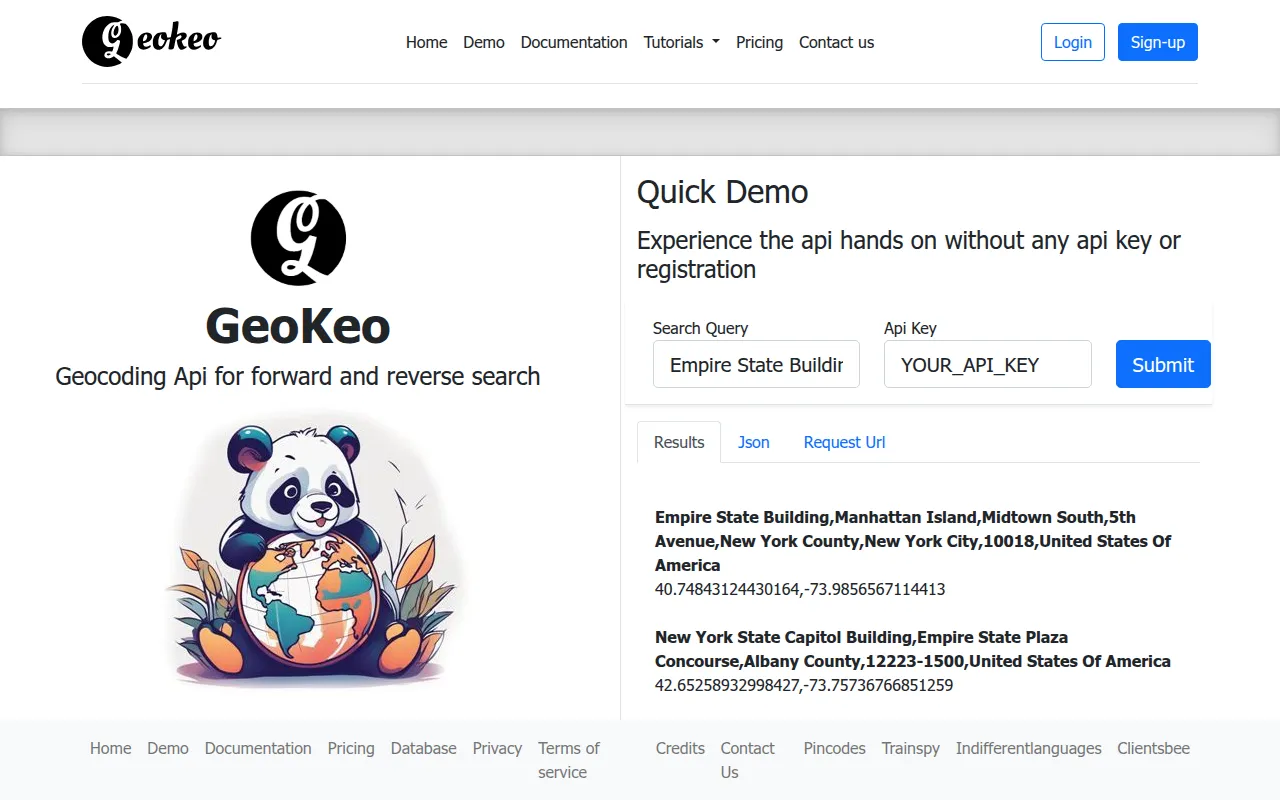
Geokeo is a geocoding API service designed for software developers and businesses that need to integrate location-based data into their applications. The tool provides forward geocoding, which converts addresses to coordinates, and reverse geocoding, which converts coordinates back to addresses.
It is designed for use in sectors such as fleet tracking, IoT, and fintech. The service uses open-source data from sources like OpenStreetMap and GeoNames, and employs NLP and machine learning for spell correction to help improve the accuracy of search results.
Buyers should evaluate their expected daily request volume to determine the appropriate plan, as the service is structured by daily API call limits. Because it is an API-first tool, technical implementation is required to integrate it into a business workflow.
Key Features
Forward Geocoding
Converts written addresses or place names into latitude and longitude coordinates.
Reverse Geocoding
Converts latitude and longitude coordinates into a formatted physical address.
NLP Spell Correction
Uses natural language processing and machine learning to correct spelling errors in queries.
Multi-Region Server Setup
Deployed across multiple regions to help reduce latency and support a claimed 99.9% uptime.
Multi-Language Support
Provides implementation options for Java, Python, PHP, C, C++, React, and Angular.
Use Cases
Fleet Tracking
Supports address lookups to locate vehicles or destinations within a tracking system.
Data Enrichment
Adds location coordinates to datasets for fintech or business analysis applications.
IoT Device Reporting
Uses reverse geocoding to report the physical location of IoT devices based on coordinates.
Bulk Address Formatting
Supports converting unformatted addresses into standardized formats with coordinates via database integration.
Integrations
- Java
- Python
- PHP
- C
- C++
- React
- Angular
- MySQL
FAQ
What is the difference between forward and reverse geocoding in Geokeo?
- Forward geocoding converts a text address into latitude and longitude, while reverse geocoding converts coordinates back into a formatted address.
Is there a free version of Geokeo?
- Yes, Geokeo provides a free plan that allows for 2,500 API requests daily.
Which programming languages does Geokeo support?
- The API supports implementation in Java, Python, PHP, C, C++, React, and Angular.
How are the geocoding results improved?
- Geokeo uses NLP and machine learning to provide spell correction and analyzes multiple open-source data sources to support coverage.
Source category: Software Development
Source subcategory: API Development
More tools in Software Development
Other published listings in the Software Development category.


More tools in the API Development software type
Related listings that share the same software type for comparison and shortlisting.